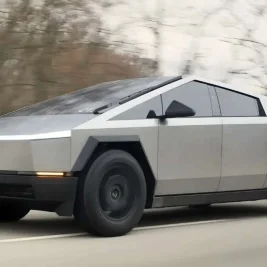
The National Highway Traffic Safety Administration (NHTSA) has declined a request to investigate Tesla's door handle design but granted a separate petition that could lead to new federal safety rules for emergency exits in all vehicles.
The decision stems from a 2022 Tesla Model 3 crash where the owner lost electrical power, couldn't find the manual release, and escaped through a rear window as the car caught fire.
NHTSA acknowledged the safety risk but said the issue is not a defect problem—rather, it exposes a gap in existing standards that focus on keeping occupants inside during crashes, not on making emergency releases obvious.
Industry-Wide Rulemaking
A separate petition asked NHTSA to create a new standard requiring a "robust and obvious door egress system" with mechanical releases that work after power loss and are intuitive to operate.
NHTSA granted that petition and will begin rulemaking.
Bloomberg reports at least 15 deaths in crashes where occupants or rescuers struggled to open Tesla doors after fires.
China already finalized a standard requiring mechanical releases from 2027, and Hong Kong has moved to ban EVs with electronic-only handles.
Some automakers, like BMW with the iX3, are building market-specific hardware, but engineering two versions is expensive.
The cheaper path is to build one that satisfies the strictest rule.
Michael Brooks of the Center for Auto Safety told Bloomberg that even if fast-tracked, changes are unlikely before 2030.