Major metropolitan areas across the Midwest and East Coast activated emergency response plans on July 1, 2026, as an intense, humid heat wave threatened to push temperatures over 100 degrees Fahrenheit ahead of the holiday weekend.
More than 160 million people nationwide faced active heat alerts. Officials in New York City, Philadelphia, Chicago, and Maryland implemented emergency safety measures.
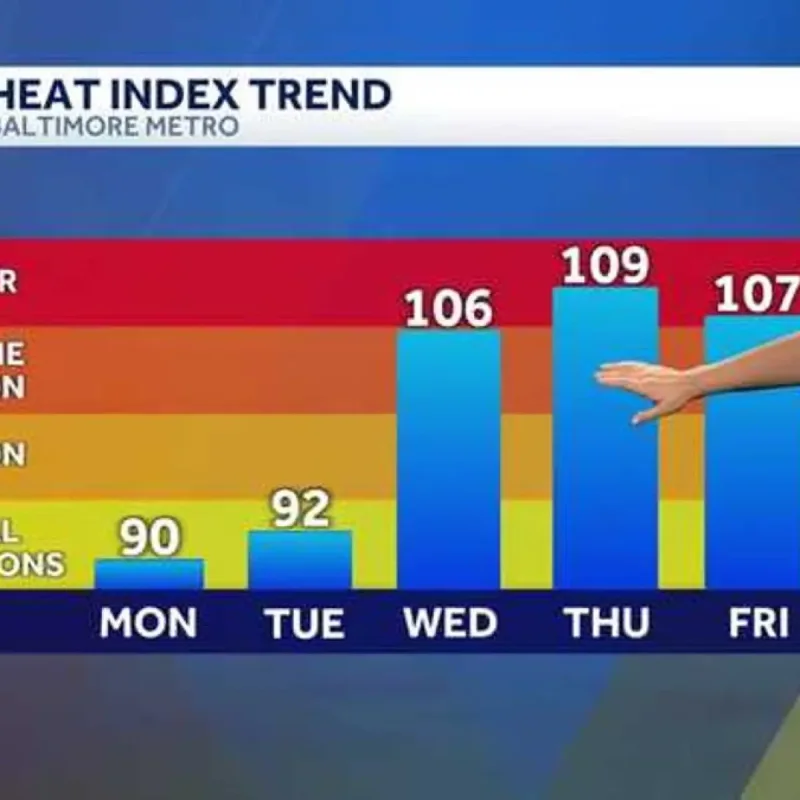
The National Weather Service issued heat advisories and extreme heat watches. High humidity pushed projected heat index values as high as 109 degrees Fahrenheit.
Maryland Governor Wes Moore declared a official State of Preparedness to mobilize emergency resources across the state ahead of the dangerous weather conditions.
"The health and safety of Marylanders, and those visiting our state for this holiday week, is our top priority," said Wes Moore, Governor of Maryland.
The declaration allows the Maryland Department of Emergency Management to coordinate resources swiftly before conditions worsen into a disaster.
"This State of Preparedness will ensure that Maryland is ready to protect our people ahead of this extreme heat.
We're also asking Marylanders to do their part to stay cool, stay hydrated and to check in on their neighbors, particularly any vulnerable populations like the elderly, children or pets to make sure they’re staying cool, as well," said Wes Moore.
Climate scientists noted that the intensity of the heat wave is heavily worsened by a combination of greenhouse gas emissions and a recently declared El Niño climate pattern.
"When there’s high humidity, especially in a heat wave, it’s much more difficult for the body to physiologically cool off," said Richard Allan, Climate Scientist at the University of Reading.
High humidity prevents the evaporation of sweat, which serves as the primary mechanism for the human body to regulate its internal temperature during periods of high thermal stress.
"The warming from rising greenhouse gases is clearly adding to global temperature, and that adds extra heat to the heat waves," said Richard Allan.
The ongoing global atmospheric changes mean that ordinary high temperatures are increasingly amplified into hazardous weather emergencies.
"It promotes moderate heat to become extreme heat … These humid conditions may be more likely to be promoted into a hot, humid heat wave rather than just humid and warm," said Richard Allan.
In response to the extreme forecasts, New York City opened cooling centers and mobile cooling vans.
Philadelphia shortened its upcoming Independence Day Parade route by one mile to protect participants.