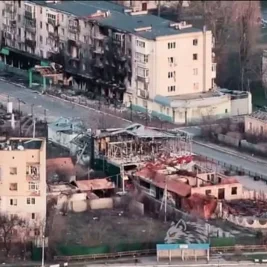
A vast cobweb of spent fibre-optic cable hangs over buildings in Lyman, a small Ukrainian city in the Donbas.
Used to control drones deployed by both Russia and Ukraine, the cable has accumulated so densely that fresh drones struggle to fly through it, their rotors tangling in the mass.
Birds pluck it out to make their nests.
Beneath the glistening strands, residential blocks lie shattered from shellfire as Moscow's forces continue to push daily to take a city they briefly occupied until Ukraine's 2022 counteroffensive drove them out.
The roughly 1,000 civilians who remain live in cellars without electricity, gas, or running water.
Lyman is the northern outpost of the "fortress belt"—a string of towns and cities crucial to Ukraine's defence in the Donbas.
It has come to epitomise Kyiv's long-term strategy to tie down and exhaust Russian forces in an urban landscape ringed by trees and rivers.
The Human Cost of the Fortress Belt
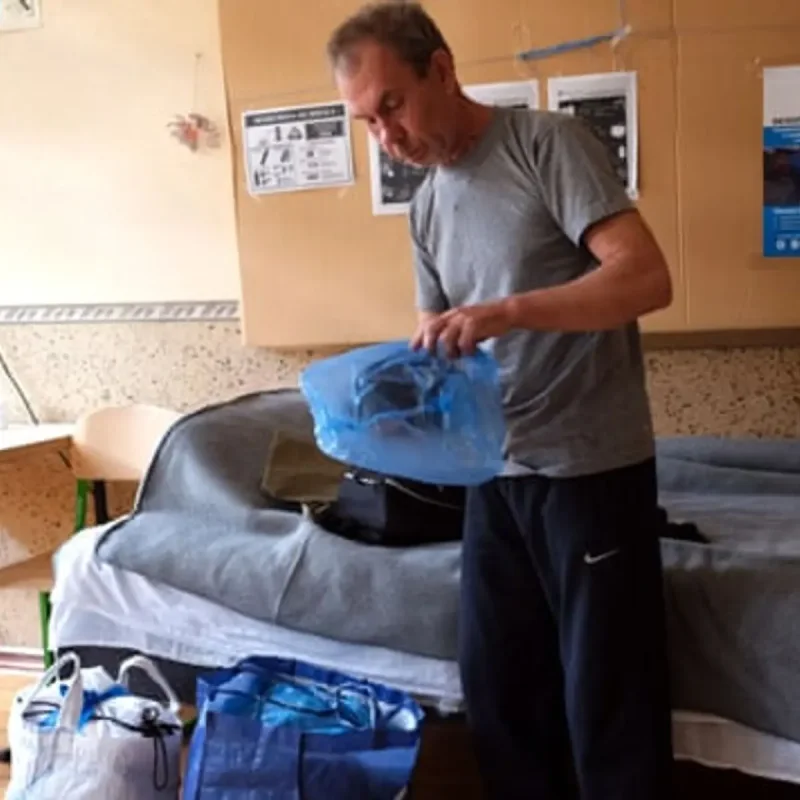
Oleksandr Pavlovych, a vegetable seller, fled Lyman the day before arriving at an evacuation centre in nearby Sloviansk.
His 78-year-old mother had been hit in the stomach by shrapnel. Over a long day, she died slowly and without help.
He buried her in the garden and then cycled 19 miles to relative safety, surviving an encounter with a Russian FPV drone that exploded on an anti-drone net covering the road, the battery striking his ankle.
"The city is so badly damaged," he said. "You have to go to the central park for the chance of mobile phone signal.
And outside the drones are everywhere. We were afraid to leave.
But when my mother died I was scared to stay on my own."
Some Donbas towns and cities, including Pokrovsk and Bakhmut, have already fallen amid bloody sieges. Others have teetered on the brink.
But in May, for the first time since another Ukrainian counteroffensive in 2023, Kyiv took back more territory than Russia captured.
There are signs that the tide may at last be tipping in Ukraine's favour.
Ukrainian drone attacks have increasingly decimated Moscow's supply lines in the Donbas and to Crimea.
A tenacious defence of the fortress belt has absorbed vast amounts of Russian lives and efforts.
The belt is part of the 10% of the Donbas not under Russian control, which Russia has demanded as part of any peace deal—a scenario Ukraine fears would leave cities to the west, including Dnipro and Kyiv, vulnerable to future invasion.
Tactical Shifts and the Realities on the Ground
The fortress belt was identified for its potential strengths after Russia seized Crimea in 2014.
The strategy foresaw a defensive line based around four large cities in Donetsk oblast and their satellite settlements, running 30 miles north to south along the H-20 Kostyantynivka-Sloviansk main road.
The area consists of dense urban centres, sprawling industrial facilities, and a complex geography of rivers, woods, and rising terrain that favours defenders.
In an April paper, the US thinktank the Institute for the Study of War described the belt as "optimised for defence across nearly every possible topographical and geographical characteristic."
It added that the high costs Russia paid in Bakhmut or Pokrovsk would pale in comparison to those necessary to seize the fortress belt.
The tempo of Russian assaults has increased sharply in recent weeks, but Russian troops have made little concrete gains while ever more lives have been fed into the Kremlin's "meat grinder."
The conduct of warfare has been utterly transformed.
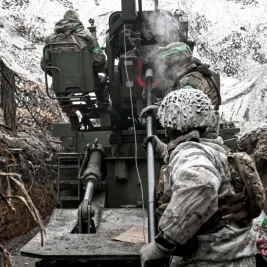
Brigades that once travelled in convoys of civilian cars now traverse the front in vehicles bristling with spikes designed to pre-detonate Russian drones, or caged in with wire grilles.
In the woods and fields, defences have been transformed into layers of deep obstacles: tank ditches, bollards, and barbed wire.
Beside physical deterrents are antennas to spot drones and electronic countermeasures to knock them out. Streets and highway sections are cloaked in anti-drone net tunnels.
"The war has changed since 2022," said Lt Col Shamil Krutkov, a commander in Ukraine's 93rd brigade.
He conceded that the defence of the fortress belt was viewed with scepticism over the years by many soldiers, but it bought time for Ukraine to adapt to a new kind of war dominated by drones, battlefield robots, and remote sensing.
Ukrainian soldiers have changed too.
Where once infantry talked about close combat, now they are as likely to be drone operators fighting remotely on a frontline that has become a heavily surveilled "kill zone."
Krutkov noted that technology has turned everything upside down.
"I'm not sure either side has the chance for a big offensive," he said, a problem for Russia's generals as they promise fresh victories.
Vadym, an officer in the 63rd brigade fighting around Lyman, credited the fortress belt successes to military reforms in 2024 that improved coordination.
"Before, a single brigade would stand its ground and then be outflanked. Now you can feel the difference.
It is better," he said. "We started creating proper kill zones.
Over the last six months in our sector we haven't given the Russians a single metre."
None of which means Russian troops have not advanced in places.
In Kostyantynivka, the southernmost point of the belt, Russian forces now occupy the east side of the city, while the western side across the Kryvyi Torets river has become a kill zone.
The advance has come at a huge cost in lives.
For Ukrainian civilians, the cost has also been heavy. In Sloviansk and Kramatorsk, factories and apartment buildings show evidence of daily strikes.
Petrol stations are netted, fuel pumps sandbagged, with concrete shelters for staff and customers. When FPV drones appear multiple times each day, a continuous siren reverberates.
In Kramatorsk, after a basement meeting with Krutkov, the Guardian encountered the aftermath of a Shahed drone strike on an apartment building that injured four people.
Yulia Melnyk, 46, who lives in the building, was fatalistic as she tidied her flat. "Sometimes the noise scares me.
But if I'm hearing the explosion, I'm alive and life goes on," she said.
Other buildings have been less lucky, but recently installed drone nets allow residents to shop at open markets.
However, the nets are effective only against smaller drones and offer no protection from larger Shaheds and glide bombs.
Overall, Ukraine feels the fortress belt is largely holding up against Russian attacks and can resist Moscow's demands to surrender territory.
The defence has given Kyiv time to implement other strategies, notably drone attacks on supply lines to occupied Crimea and the Donbas.
Vadym said: "The enemy is not giving up on trying to storm Lyman. Their task last year was to take Lyman by October.
Then it was by the end of the new year. Then March.
Now, by the end of summer."
Defending one town helps defend the others, though he noted that interconnectedness could be a vulnerability if logistics routes are cut.
At the evacuation centre in Sloviansk, Lyudmilla, 68, and her friend Tatiana had just escaped from a village two miles from Russian lines.
Lyudmilla was exhausted and traumatised.
The day before, a Russian glide bomb hit her house, killing her husband and two other men, and amputating the hand of a neighbour.
"I had just gone into the yard. It was a miracle I wasn't hurt.
For the last two years we have been living in the cellar," she said. "I need to know what happened to my husband.
I can't rest until I know."