Christopher Nolan has adapted Homer's ancient epic poem "The Odyssey" into a massive film production scheduled for release on Friday, July 10, 2026.
The project follows the major commercial success of his previous feature "Oppenheimer."
The production carried an estimated budget of $250 million and concluded principal photography nine days ahead of its 91-day schedule.
The finished feature runs for 2 hours and 53 minutes, utilizing approximately 11 miles of celluloid for its preferred Imax format.
Filming for the multi-national project took place across six different countries and required extensive on-water sequences.
The adaptation marks the first major cinematic feature based on the classic text, filling what Nolan identified as a significant cultural gap.
"One hundred percent," said Nolan.
Nolan noted that commercial success in Hollywood grants directors opportunities to helm personal passion projects.
He pointed to his development of "Inception" after "The Dark Knight" and "The Odyssey" following "Oppenheimer."
"Every now and again, if you're really lucky and something really clicks, if your work catches a wave, that happens," said Nolan.
"After 'The Dark Knight' we were able to do 'Inception' and after 'Oppenheimer' was such a success, far beyond what we hoped for, we had the opportunity to do 'The Odyssey.'"
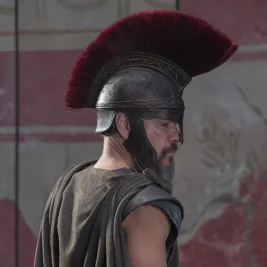
The project provides a large-scale modern interpretation of the classical story, which features Trojan War veteran Odysseus alongside prominent mythological characters.
"As a filmmaker, you are looking for a gap in the culture and this felt like an important one," said Nolan.
The director stated that the narrative had not been addressed on a grand cinematic scale since the low-budget stop-motion work of Ray Harryhausen.
"That world felt like it hadn't been addressed," said Nolan.
"Ray Harryhausen did it working on a shoestring, but the opportunity to take this on — on a big scale — was there, and it hadn't been there before."
Nolan wrote the screenplay using colloquial and contemporary dialogue to establish an emotional connection with contemporary viewers rather than utilizing artificially elevated speech.
"Homer was the co-writer, a very good co-writer," joked Nolan.
The director stated that re-reading the ancient text as a middle-aged man shifted his perspective toward themes of love, loss, and family.
"I wanted to tell it in a fresh and modern way, to make it as accessible for a modern audience as it was for Homer's," said Nolan.
Nolan realized that the foundational archetypes of the ancient story had already been present across his entire filmography for many years.
"But coming to the text again now, you have a slightly different perspective," said Nolan.
"It reads differently as a middle-aged man. It's more about love and loss, a middle-aged love story."
The director previously came close to the narrative material when he was considered to direct the 2004 movie "Troy," which was based on Homer's "The Iliad."
"I've been telling this story in all my films for years," said Nolan.
"It's a family story, a love story, a revenge story, a war story, a coming-of-age story. It's a very strong foundational text for me."
During that early pre-production period, Nolan conceived an image of the Trojan horse listing in the sand, which he subsequently integrated into this current film.
"It stuck with me," said Nolan.
The script utilizes contemporary phrasing to keep the narrative grounded, a creative choice the director viewed as essential for the adaptation.
"It's a powerful image I really wanted to film," said Nolan.
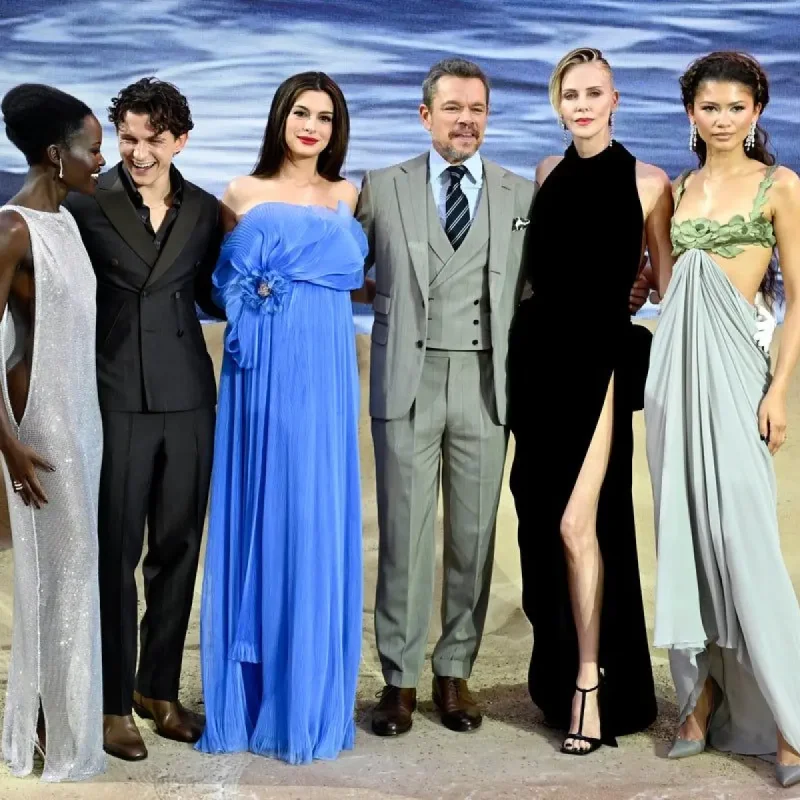
The production features a star-laden ensemble cast, including Jon Bernthal as King Menelaus, Lupita Nyong'o as Helen of Troy, and Zendaya as Athena.
"I was maybe being naïve, it might bite me on the ass, but I wanted an earthy narrative," said Nolan.
"To me it was a no-brainer."
Nolan cast well-known performers in these iconic mythological roles to help modern audiences quickly connect with the ancient characters.
"These are mythological figures, iconic in some ways," said Nolan.
Actor Matt Damon was selected to portray the lead character Odysseus, marking his third collaboration with Nolan after roles in "Interstellar" and "Oppenheimer."
"I wanted to cast it big, get the finest bunch of actors," said Nolan.
The director stated that he generally avoids writing screenplays with specific actors in mind because it can limit the creative process.
"It's limiting," said Nolan.
Nolan explained that Damon possesses a strong connection with audiences, which helps them follow a highly complex character who makes numerous mistakes.
"I'd worked with Matt twice before and he has such a great connection to the audience, he draws them in," explained Nolan.
The director described the character of Odysseus as a combination of an ordinary everyman and a superhero figure.
"For this very complex character, you need an actor who disappears into parts, who is very open to the audience," said Nolan.
"You want the audience to go with him through his mistakes — and he makes a lot of mistakes.
Matt was everyman for 'The Martian,' a kind of superhero for the Jason Bourne films, and Odysseus is part everyman, part superhero."
Nolan noted that Damon lacks movie-star baggage, which helped him lead the rest of the cast through demanding physical labor during boat rowing scenes on location.
"Though he's one of the most proficient and accomplished of actors, he has no movie-star baggage," explained Nolan.
The production relied heavily on Damon's leadership to manage the challenging physical environment of the shoot.
"We were going to really challenging locations, doing a lot of boat work, and he helped to lead that process," said Nolan.
"The rest of the cast, a cadre of guys who worked their asses off rowing, was looking to him and everyone saw what he was doing for the film.
Without Matt, we would have been better off doing it on a sound stage."