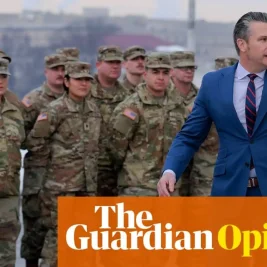
The US Navy announced on July 7, 2026, that active duty and reserve sailors with medical shaving waivers diagnosed with permanent skin conditions will face administrative separation if they cannot meet clean-shaven standards after 12 months of treatment.
The directive aligns the service with a Department of Defense mandate issued by Defense Secretary Pete Hegseth to enforce strict grooming and readiness standards across all military branches.
Under the updated policy, permanent shaving waivers will no longer be issued for conditions such as pseudofolliculitis barbae, a painful skin irritation common among Black men that causes razor bumps and severe inflammation when shaving.
Affected personnel must undergo a military medical evaluation to receive a structured treatment plan, which commanding officers can approve in 90-day increments for a maximum duration of one year.
The policy permits temporary waivers allowing facial hair up to one-quarter of an inch, but failure to comply with uniform rules after 12 months triggers mandatory discharge processing, with separations scheduled to begin no earlier than July 8, 2027.
Exceptions remain intact for religious accommodations, and special operations units like Navy SEALs may request modified standards for specific missions, provided they remain clean-shaven in environments with chemical or biological threats.
The policy shift follows recent ship visits by Hegseth, who observed multiple sailors violating the dress code and subsequently ordered political appointees and Pentagon officials to accelerate personnel reforms.
"Want to bring to your attention that the SecWar is paying close attention to the progress of the EEO [Equal Employment Opportunity] reforms," a Pentagon official focused on civilian personnel policy emailed colleagues in June.
The email noted that leadership intended to expedite policy timelines, highlighting Hegseth's broader focus on shifting the internal culture of the military workforce away from previous administrative backlogs.
"In fact, the push is to move faster … there is a need to revamp some of our timelines," the email stated.
Pentagon officials confirmed that the revisions aim to standardize discipline and ensure that protective gear, such as gas masks and oxygen equipment, can form an airtight seal on service members during deployments.
"Maintains the highest expectations for our service members to uphold the professional standards of appearance, fitness, and discipline that define our warfighting force, and he continues to emphasize consistent enforcement of hair, weight, and grooming standards across all ranks," said Pentagon spokesman Sean Parnell in a statement regarding Hegseth's policy enforcement.
Department leadership emphasized that accountability would be directed toward supervisors to guarantee visible progress in physical training and presentation.
"Commanders will be held accountable for delivering results as the Department works to restore a culture of excellence and readiness," Parnell said.
Scholars noted that the accompanying Equal Employment Opportunity changes could shorten processing times for internal workplace grievances, which previously left personnel under prolonged professional uncertainty.
"For those filing a substantiated complaint, long timelines delay appropriate intervention; those who have an unsubstantiated claim filed against them have a cloud of suspicion hanging over them until the process is complete," said Katherine Kuzminski, a scholar at the Center for a New American Security think tank.
Conversely, advocacy groups criticized the swift implementation of the grooming mandate, arguing that discharging trained service members for a treatable medical condition undermines diversity and retention during active global conflicts.
"No more beardos," Hegseth said in a speech to hundreds of top military officers.
The defense secretary publicly defended the restrictions by characterizing long-standing shaving profiles as detrimental to military uniformity.
"The era of rampant and ridiculous shaving profiles is done," Hegseth said.
Veterans organizations stated that the strict timeline disproportionately penalizes minority troops who had been receiving adequate, long-term dermatological care from military medical facilities.
"Allows for an environment of hostility to our Black troops in uniform in part because it opens them up to greater harassment from their senior enlisted," said Richard Brookshire, co-founder of the nonprofit Black Veterans Project.
Brookshire argued that the military risks losing significant investments made in specialized training by separating personnel over an established medical issue.
"It opens them up for … disciplinary action for a treatable condition that the military had been adequately treating for well over a decade," Brookshire said.
The organization questioned the strategic rationale of the discharges given the current geopolitical landscape.
"You're talking about getting rid of well-qualified, patriotic, lethal soldiers at a time our country is propagating new and complex wars, after spending quite literally millions of dollars to train these men and women," Brookshire told CNN.
Navy leaders instructed commands to utilize the next 12 months to update local procedures, conduct mandatory counseling for affected sailors, and distribute newly revised educational materials before separations commence.