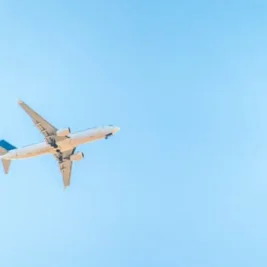
The US Navy officially retired its last C-2A Greyhound aircraft on July 28, 2026.
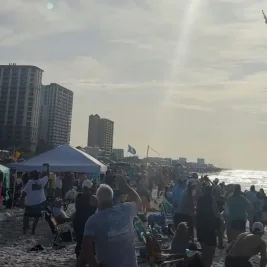
The plane landed at Naval Air Station Pensacola after a final flight escorted by the Blue Angels.
The retirement marks the end of six decades of carrier onboard delivery service for the fixed-wing platform. Operations are transitioning to the tiltrotor Bell Boeing CMV-22B Osprey.
Final Flight and Ceremony
The last operational unit, Fleet Logistics Support Squadron VRC-40, held a sundown ceremony. The final airframe was transferred to the National Naval Aviation Museum in Florida.
The Greyhound made its final carrier landing on the USS Nimitz in June.
Lieutenant Commander Alex Vogel highlighted the challenges of flying the aging twin-engine turboprops across the Pacific.
“It’s a little bit of a nail-biting experience to make sure that your fuel transfers properly and that your engines are running properly,” Vogel said.
Pilots rotated duty in the cockpit while auxiliary tanks supplied extra fuel during critical transits.
Vogel noted the unique role the Greyhound played in bringing non-aviator passengers aboard carriers.
“For all tailhook aviators, the most exciting thing you can do is land on the ship or take a catapult shot from the ship,” Vogel said.
“Our platform is extremely unique in that we can provide that opportunity for 20 plus passengers at a time.”
He added that introducing passengers to carrier operations remained a highlight.
“Having the opportunity to do that for everything from Make-A-Wish kids to high school teachers to foreign dignitaries is really rewarding,” Vogel said.
Vintage Aircraft, Unique Challenges
Commander Paul Ingram, the final commanding officer of VRC-40, noted the independent nature of Greyhound deployments.
“I don’t think there’s anywhere else in the conventional military where so much is on such a junior group,” Ingram said.
Ingram emphasized the absence of complex automated flight computers on the C-2. The aircraft used traditional mechanical cables connected to hydraulic actuators.
“You’re operating independently overseas.
You have to understand the Law of the Seas and the rules for international flying because there’s nobody there,” Ingram said.
“You’re by yourself out there.”
The physical effort required to fly the heavy mechanical control systems earned the platform its vintage reputation.
“It’s a bit of a bear to fly, but there’s no computers between you and the air,” Ingram said.
Ingram characterized the flying experience as “pounding the air into submission.”
He recalled flying long routes across the Middle East, describing his favorite moment as “coming back from the ship, flying west from the North Arabian Sea into a sunset that just goes on forever.”
Former C-2 pilot James Wallace, who served from 1979 to 1982, recalled the protocol and passenger briefings required.
He described passengers as “always apprehensive.”
The C-2A Greyhound offered a 10,000-pound payload capacity compared to the Osprey's 6,000-pound capacity.
However, the CMV-22B was chosen to transport the Pratt & Whitney F135 engine power module for the F-35C Lightning II.
The Osprey also provides vertical takeoff, air refueling, and direct delivery to non-carrier vessels.