Online conspiracy theories have surged across social media platforms following the sudden death of US Senator Lindsey Graham and a prolonged public absence by Senator Mitch McConnell.
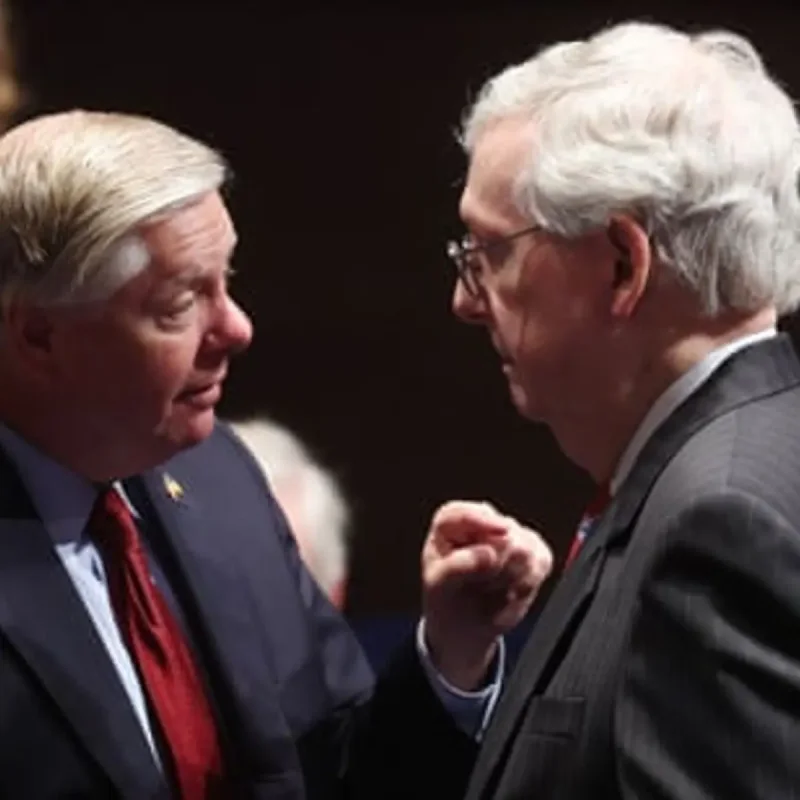
As reported by The Guardian, these rumors are targeting two of the most prominent Republicans in the Senate, fueled by falling trust in public institutions and government transparency.
Trump and Lawmakers Respond
Donald Trump addressed the speculation on Tuesday, expressing doubt over any foul play and questioning the necessity of federal involvement at the late senator's residence.
"I know there's all sort of conspiracy theories," said Donald Trump, President of the United States.
Trump highlighted that Graham had a history of cardiovascular issues and noted that aortic dissections are notoriously difficult to predict.
"I think the FBI is wasting their time," said Donald Trump, President of the United States.
Social media commentators and right-wing influencers have driven much of the online chatter, questioning both official medical findings and the proof-of-life updates released by congressional offices.
Political science experts note that while these digital rumors gain immense visibility, they do not necessarily translate to widespread public belief.
"If we were having these conversations at the water cooler, our words would be here and gone, and nobody would see it," said Joseph Uscinski, Political Science Professor at the University of Miami.
Uscinski, who has tracked conspiracy trends since 2022, explained that the permanence of social media makes alternative narratives highly accessible during major political developments.
"But because social media is sort of there forever, people who want to know what other people are talking about can easily see it and access it.
But it doesn't mean that it's persuading anyone," said Joseph Uscinski.
He emphasized that heightened public focus on significant events naturally inflates the attention given to accompanying rumors, though actual believers remain in the minority.
"That's a difference between the online chatter and belief," said Joseph Uscinski.
According to the researcher, online engagement is often disconnected from the knowledge or opinions of the broader electorate.
"You can get a lot of people buying into something online, but then you go poll on it, and people are like, who's Lindsey Graham, who's Mitch McConnell?"
said Joseph Uscinski.
Meanwhile, questions regarding Mitch McConnell arose after he vanished from public view in mid-June, culminating in his office releasing a photo of him holding a recent newspaper.
The image was meant to quell claims that he was no longer alive, but instead drew further skepticism from commentators and fellow lawmakers alike.
"I've just heard from some other sources that was an older photo. So I really don't know," said Ron Johnson, US Senator.
Senator John Cornyn of Texas also commented on the situation, expressing that a more proactive communication strategy from McConnell's team could have prevented the rumors.
Cornyn also called for transparency regarding Graham's autopsy, suggesting a public toxicology report would put lingering doubts to rest.
"Given where he was and the sorts of things he was advocating for, I think we just ought to resolve all those questions by seeing what the toxicology reports show," said John Cornyn.
Official updates have added fuel to the online speculation, with law enforcement agencies confirming their involvement in the aftermath of Graham's passing.
"Assisting local authorities and has made every necessary resource available," said Kash Patel, FBI Director.
Prominent right-wing figures have seized on this federal presence to question the official medical explanation of an aortic dissection.
"I didn't realize 20 FBI agents were needed to convince everyone that Lindsey Graham died from an Aortic Dissection," said Laura Loomer, Commentator.
Loomer has continued to push for more information, pointing to the pending laboratory results.
"Did the toxicology report come back? 2 things can be true at once," said Laura Loomer.
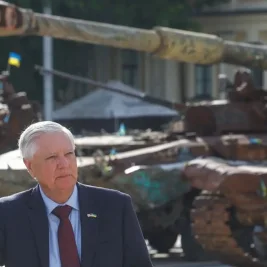
Political commentators have pointed to Graham's recent trip to Ukraine as a reason why the public remains skeptical of a natural cause of death.
"Not a conspiracy theory to suggest something else might be at play," said Marc Thiessen, Commentator.
Thiessen emphasized the history of state-sponsored poisonings targeting opponents of the Russian regime.
"Putin has poisoned and assassinated many of his opponents, and Graham was just in Kyiv where there are certainly FSB agents operating," said Marc Thiessen.
To prevent further speculation, Thiessen urged authorities to conduct comprehensive medical testing.
"There should be a full autopsy and tox screen to rule out foul play," said Marc Thiessen.
In response to the growing public pressure, Graham's office confirmed that the final determination on the senator's death certificate remains on hold.
"Pending until all the toxicological and microscopic testing are finalized," said Graham's Office, Spokesperson.