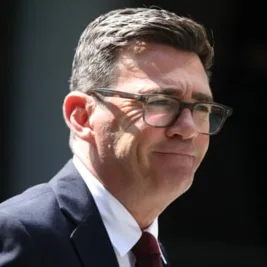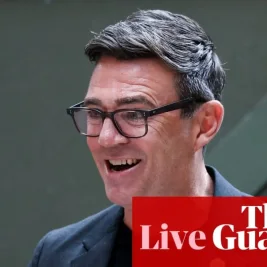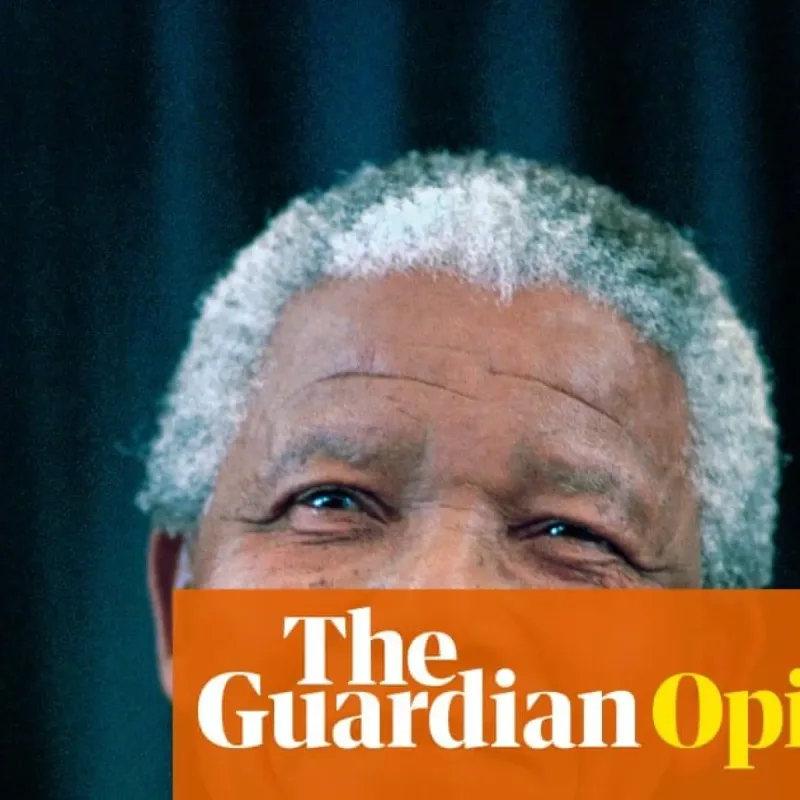
In a speech delivered Wednesday to honor Nelson Mandela Day, New York City's mayor reflected on the enduring lessons of Madiba's life and leadership in a fractured era.
“What a privilege it is to be together to honor the leadership of the Nelson Mandela Foundation,” the mayor said, acknowledging the organization's 27-year effort to keep Mandela's legacy alive in movements for freedom.
Madiba lives on in every protest for justice, every call for democracy, and every person who fights for dignity, the mayor added.
“He lives each time someone bears witness to oppression and does not accept it as inevitable.”
Mandela was South Africa's first Black president and its first democratically elected head of state, voted in by citizens of every skin color.
But for a five-year-old in 1996 Cape Town, he was simply the first president the child ever knew—a man who seemed capable of changing the world.
“Next to my childhood fridge magnets of David Seaman, Sylvain Wiltord, and the Arsenal squad was a magnet of Madiba in a Bafana Bafana kit,” the mayor recalled.
The lesson he took from those early years: justice must be material, not just an ideal.
While Mandela has been elevated to near-messianic status—the Nobel Peace Center calls him “a Messiah for millions”—the mayor cautioned against treating him as more myth than man.
“To sanctify him is to do him a grave disservice,” he said, quoting Mandela's own words: “I am not a saint, unless you think of a saint as a sinner who keeps on trying.”
Mandela was flawed like anyone else, a member of a movement prone to infighting, a leader who won seismic victories but whose dream for South Africa remains unfinished.
“It is his humanity that allows us to look towards the next generation of leaders and say sincerely: you, too, can be Madiba,” the mayor said.
The speech launched the Mandela Foundation Global Leadership Forum, aimed at continuing the struggle for dignity amid a global landscape of strongmen, corruption, and enduring apartheid in different forms.
Mandela's unwavering solidarity
The mayor recalled a pivotal moment in June 1990, four months after Mandela's release from Robben Island, when he faced a hostile town hall with ABC News's Ted Koppel.
Questioners attacked Mandela's relationships with world leaders considered US foes and his support for the Palestinian cause.
Mandela refused to be baited.
When asked about alienating the Jewish community over Palestinian solidarity, he flipped the question: can a politics of universalism exist if it is riddled with exceptions?
“Anybody who changes his principles depending on with whom he is dealing? That is not a man who can lead a nation,” Mandela said.
The mayor highlighted Mandela's lesson: solidarity must be universal and unyielding, extended even when the injustice is contested.
“Solidarity, as Pope Francis told us, is uncomfortable. Solidarity, as Madiba proved for 95 years, is not just a value, it is a strategy.”
Mandela becomes a mirror, the mayor argued.
“When we hear his refusal to abandon those with whom he shared common cause, do we recognize ourselves?
Or do we recognize only the version of Mandela that asks nothing of us?”
He pointed to hypocrisy: UK Tories who called Mandela a “true global hero” after opposing sanctions in the 1980s; US officials who kept him on terrorist watchlists until 2008; jailers who abused him yet attended his funeral.
“I find myself at a loss,” the mayor said, “and then I remember Madiba—a man with the capacity to forgive, who extended solidarity to all.”
Three days from now, the world will mark Nelson Mandela Day.
The mayor urged reflection on who today is treated the way Mandela was before history declared him a messiah.
“Who else has seen their humanity made conditional, has been told their freedom can wait?
Who else is leading a cause that we will glorify in retrospect, but is being vilified in the present?”
He cited Palestinian freedom, Dr. Hussam Abu Safiya's 18-month detention in Israel, and Umar Khalid's six years in captivity in Delhi as examples.
“Justice is not measured by where we stand after history has issued its verdict. It is measured by where we stand when the verdict is still being rendered.”