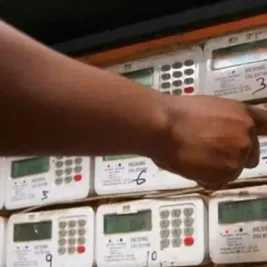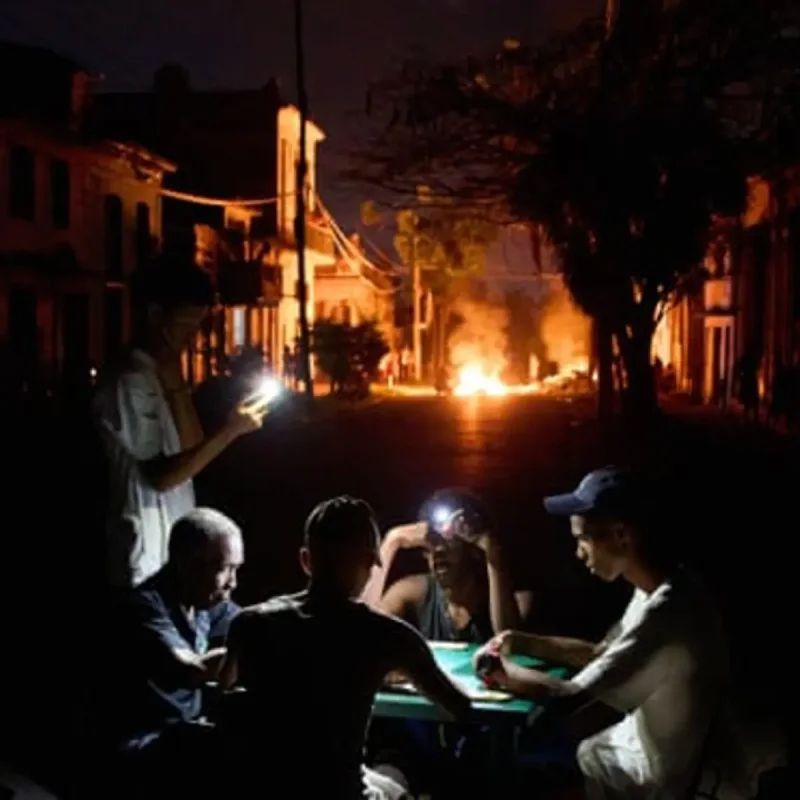
Cuba experienced its third nationwide electrical grid collapse in ten days on Tuesday, as a six-month US oil blockade exacerbates the island's aging energy infrastructure, according to The Guardian.
The crisis has left 9.5 million citizens enduring extreme heat and humidity, shifting the public mood from vibrant street music to widespread protests marked by the rhythmic banging of pots and pans.
Experts trace the systemic failures to the fundamental exhaustion of the nation's primary energy facilities.
“The backbone of the system is still the big power plants,” said Jorge Piñon, senior energy researcher at the University of Texas.
“And they’re old, broken and tired.”
Local residents report that intermittent electricity supplies fail to sustain basic daily functions amid broader economic deterioration.
“An hour isn’t enough time to run the pump to get water or to charge phones,” shouted Alberto, a middle-aged resident in Havana’s Vedado neighborhood.
“People want the government to act right now.”
The Cuban administration maintains that international economic pressures have severely restricted its operational capacity.
“We’ve said it before, there is a total absence of fuel,” said Vicente de la O Levy, the minister of energy.
“And we do not have access to spare parts for our thermoelectric units.”
Geopolitical Tensions and Political Fallout
Geopolitical tensions escalated earlier this year following US actions in Venezuela, leading to declarations from Washington regarding the future of the Cuban government.
“Whether I free it, take it, I think I can do anything I want with it,” Donald Trump told reporters at the White House in March.
American sanctions have driven foreign operators out of Cuba, impacting shipping companies, airlines, miners, and hoteliers.
“We have seven containers in Kingston and another 40 in China, but we have no idea when, or if, they will arrive,” said an unnamed electric car importer.
Human rights organizations report an increase in political detentions following public demonstrations against ongoing utility shortages.
According to Madrid-based group Prisoners Defenders, the number of political prisoners has risen to 1,306, with individuals like Héctor Ochoa Vergara being detained after taking part in a peaceful demonstration against blackouts and water shortages in Ciego de Ávila.
Leaked communications regarding potential economic and political reforms have centered around the grandson of Raúl Castro, who recently defended his position to the press.
“It pains me that many people can’t live the way I do,” Raúl Guillermo Rodríguez Castro told USA Today.
He indicated he had no initial interest in politics but remained open to future governance roles.
“If at some point the revolution needs me to step up, I will do it,” he added.
The public display elicited criticism from Cuban academics, journalists, and television figures who questioned his lack of official institutional standing.
Academic observers suggest the high-profile interview indicates a breakdown in private diplomatic channels with Washington.
“I think there’s an open question as to who exactly he speaks for, and whether the channel of communication with him is ongoing or not,” said Michael Bustamante, chair of Cuban and Cuban American studies at the University of Miami.
Meanwhile, political figures in Florida have alleged security cooperation between Cuba and Iran regarding drone procurement.
“I think it’s important to recognise that Iran has consistently been working with Cuba,” said Jeb Bush, former Florida governor.
The White House echoed these concerns regarding foreign defense cooperation on the island. “We’re not going to allow that to happen,” Donald Trump added.
State Department officials have dismissed Cuba's legislative efforts to expand its private sector as superficial. Although technicians reconnected the national grid at 7 a.
m. on Wednesday, local citizens express deep uncertainty regarding structural stability.
“What I hear is a level of desperation that doesn’t allow the distance to discuss the future,” said Laura Garcia, an illustrator and single mother from Havana.
She noted her neighborhood had endured 72 consecutive hours without electrical power. “What has to fall doesn’t fall,” she muttered.