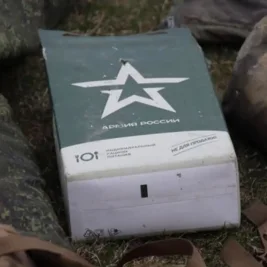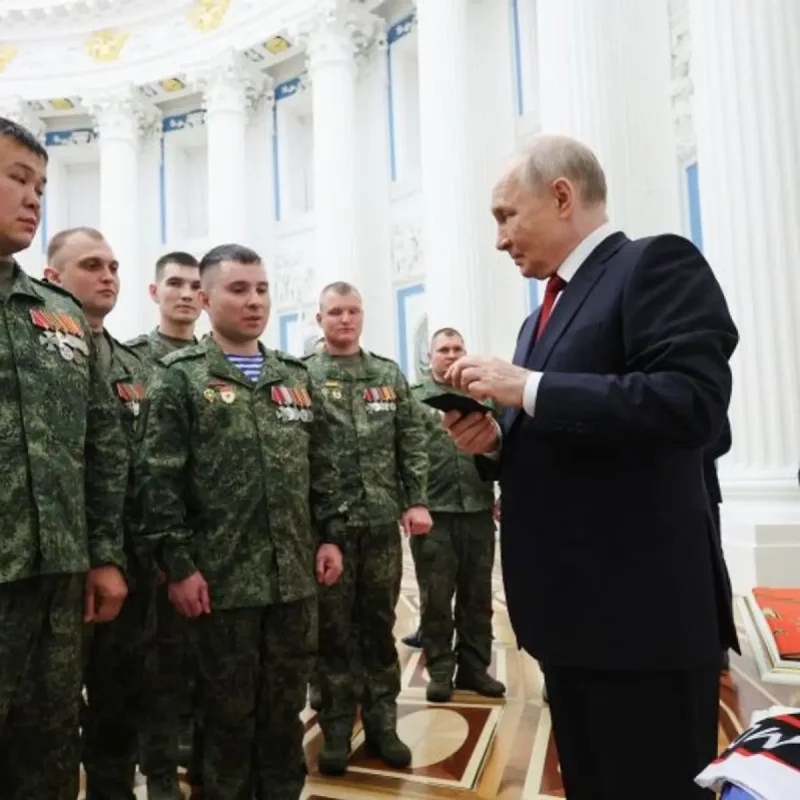
Russian President Vladimir Putin signed a decree on September 28 setting the authorized strength of Russia's armed forces at 2,441,630 personnel, including 1,550,500 active military personnel.
The order adds 15,500 troops and marks the fourth official increase in military staffing levels this year, bringing total personnel added since March to 47,860.
The decree, published on Russia's legal information database, did not provide a reason for the expansion or outline how the new personnel would be recruited.
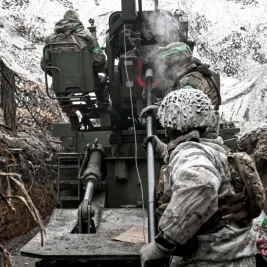
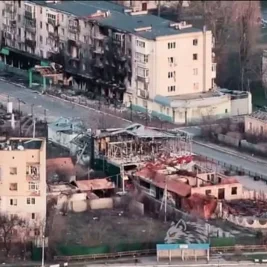
The increase comes amid sluggish battlefield progress in Ukraine, where both sides sustain heavy losses and increasingly rely on aerial drone strikes.
Analysts See Technical Adjustment, Not Strategic Shift
Andrei Kortunov, director general of the Russian International Affairs Council, described the expansion as an incremental operational adjustment.
"This is mostly a technical decision rather than a strategic shift.
It is technical in the sense that another 15,000 will not change the conflict dynamics," Kortunov said.
Kortunov added that diplomatic resolution options remain distant for both nations. "As for a diplomatic solution, we are still far away from it," he said.
Olena Halushka, a board member at the Kyiv-based Anti-Corruption Action Centre, offered an alternative analysis, stating that the ongoing war effort has failed to meet Moscow's original timelines.
"Last year, at the Anchorage summit [in the US state of Alaska], Putin continued to demand that Ukraine withdraw from the rest of the Donetsk region that Russia had failed to capture, likely claiming that Ukraine would soon lose those lands anyway.
Yet a year afterwards, the situation on the battlefield today shows absolutely the opposite," Halushka said.
Halushka emphasized that the order reflects long-term structural needs.
"Putin's latest decree is … likely not the last, and should be viewed in the context of Russia's continuing efforts to expand the manpower available for a protracted war," she said.
Defense analyst Alexey D Muraviev highlighted broader geopolitical friction beyond immediate operational needs in eastern Ukraine.
"Putting things into place would require some time in terms of planning, in terms of recruitment, in terms of formation of new units, and that's not going to address Russia's immediate operational needs at the theatre of war," said Muraviev, professor and senior research fellow in Defence and Strategic Studies at Edith Cowan University.
Muraviev noted that friction with NATO and regional developments in the Pacific are shaping Russian force structure.
"This also drives Russia's continuous reorganisation of its military, the expansion of its standing force, and the formation of new units, including army divisions and marine divisions," he said.
He pointed out that Russian defense planners remain attentive to military positioning in East Asia.
"We should also be mindful that the Russians are concerned about the buildup of Japan's military power, as well as US military power in the Pacific, and subsequently the need to respond to those security concerns," Muraviev said.
Zelenskyy Warns of Foreign Troop Deployments
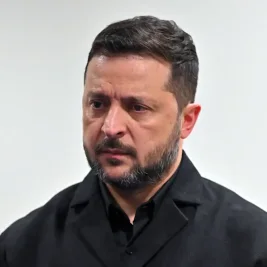
Ukrainian President Volodymyr Zelenskyy reported on September 28 that Russia is intensifying troop recruitment while preparing additional foreign forces for deployment.
"In addition, preparations are underway to deploy another 10,000 troops – they are being selected for training and subsequent deployment to Russia," Zelenskyy said.
Zelenskyy stated that Moscow is providing military tech assistance in exchange for foreign manpower.
"In return, Russia is paying, among other things, with technology: production of Shahed-type attack drones has been established in North Korea with Russian technical support," he said.
Addressing drone defense, Zelenskyy outlined efforts to counter high-speed aerial strikes. "New interceptors are being actively tested," he said.
He explained that deployment is progressing across active military formations.
"Some combat groups are using them, but, of course, some details still need to be refined to achieve enough effectiveness and scale.
We are speeding up the developers," Zelenskyy said.
Commenting on internal Russian recruitment efforts, Zelenskyy urged international intervention. "They are increasing the number of people they recruit through various methods," he said.
He called on foreign governments to restrict Russian enlistment operations within their borders.
"It is important that the governments of countries from which Russia recruits people for its army take action against this," Zelenskyy said.
In response to Ukrainian military intelligence reports claiming new mobilization drives, Russian President Vladimir Putin previously dismissed claims of mandatory reservist calls as "utter nonsense."