Jean-Luc Mélenchon has shaped La France Insoumise into a tightly organized political movement as he prepares for another presidential campaign in France.
The far-left leader remains a leading contender in polling, relying on a close circle of aides and a disciplined party structure that has strengthened his influence while deepening internal divisions.
According to The Spectator, Mélenchon ranks second in most presidential polls, behind Marine Le Pen, who remains the leading candidate despite ongoing legal problems.
His performance in the 2022 election brought him within 1.5 percentage points of reaching the runoff.
A movement built around one figure
Born in Tangier in 1951, Mélenchon worked as a socialist schoolteacher before becoming a senator at 35.
He later served briefly as a minister under former Prime Minister Lionel Jospin.
He has spent 18 years building LFI around his political vision, and the upcoming presidential contest would be his fourth campaign for the office.
His ability to mobilize supporters remains a central feature of his political operation.
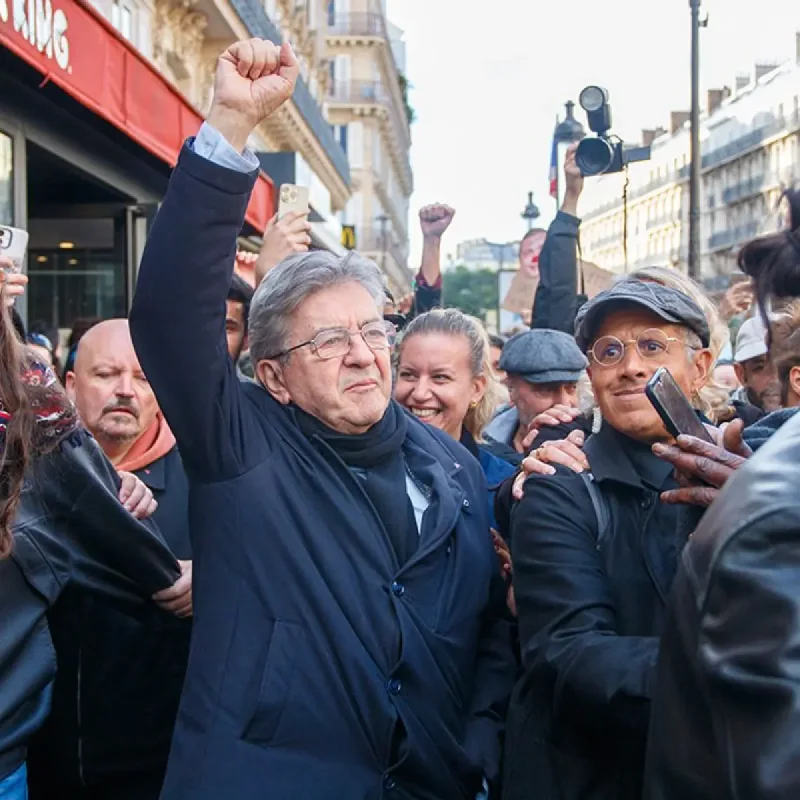
A rally in Saint-Denis in June drew tens of thousands of people, according to the source, highlighting the movement's capacity to assemble a large audience.
Mélenchon's senior team includes Manuel Bompard, a doctor of applied mathematics who directed his campaigns in 2017 and 2022 and later won his former political seat in Marseille.
Bompard occupies a central strategic role within the organization.
Mathilde Panot, an international relations graduate of Sciences Po, serves as president of LFI's parliamentary group.
Sophia Chikirou, the party's communications director, is another prominent figure in Mélenchon's inner circle.
The organization also includes several lawmakers associated with controversial political activities.
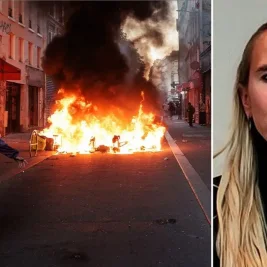
National Assembly member Raphaël Arnault co-founded Jeune Garde, an organization whose militants are under investigation in connection with the death of 23-year-old Quentin Deranque, who was beaten in a Lyon street in February.
According to the article, two people charged in connection with the case worked as Arnault's parliamentary assistants.
The source also notes that European Parliament member Rima Hassan, who was born in a Syrian refugee camp, went on trial during the week of publication over allegations of glorifying terrorism.
Another LFI lawmaker, Sébastien Delogu, represents Marseille in the National Assembly.
These figures occupy different positions within the movement, whose leadership structure places Mélenchon at its center.
The Spectator also describes a party culture characterized by strict loyalty and coordinated messaging.
The article alleges that supporters use online networks to target critics with threats and insults, while the leadership maintains a strong degree of control over internal political strategy.
Internal divisions became particularly visible before France's snap election in 2024.
Several longtime members, including co-founders of LFI, challenged Mélenchon's continued leadership and argued that he should not be the party's presidential nominee.
Five days after the rebellion began, most of the dissenters faced official LFI candidates running against them, according to the article.
Former party members subsequently became less prominent in communications among their previous colleagues.
Alexis Corbière, a longtime associate of Mélenchon, was among those who challenged him but managed to retain his seat in the National Assembly.
His experience was featured in La Meute, a book examining what its authors characterize as the party's harsh internal methods.
The movement's intellectual infrastructure includes the Institut la Boétie, a think tank founded in October 2019 by Bernard Pignerol, a councillor of state and longtime associate of Mélenchon.
The institution forms part of the broader organizational network developed around LFI's leadership.