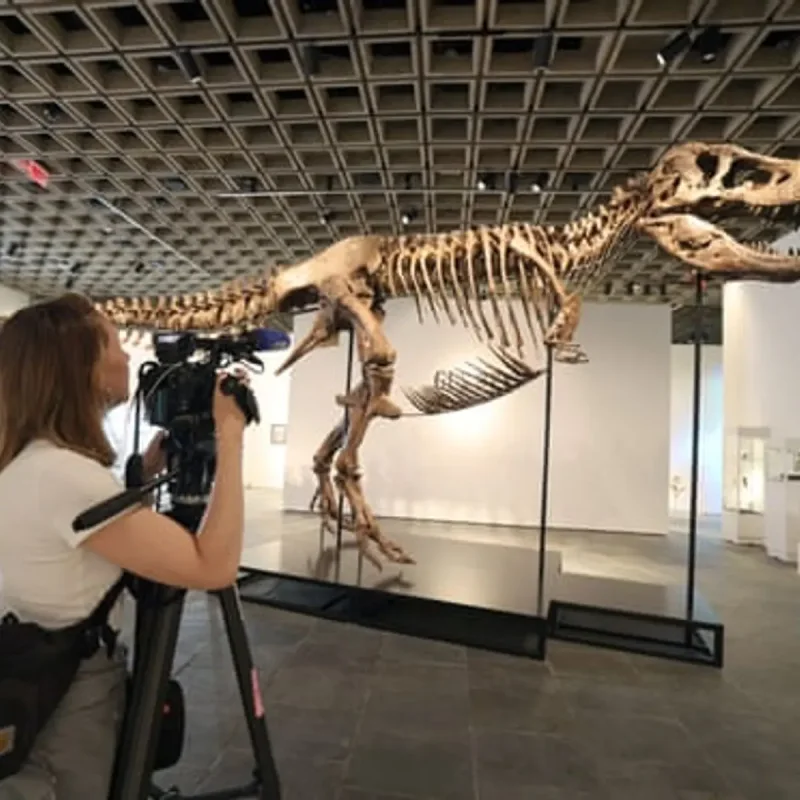
"When we publish research, we need to make sure that research is repeatable, meaning that other scientists can check our data and results and verify our conclusions, or not," said Brusatte.
"The only way for our research to be repeatable is if the dinosaur fossils we study are in a museum, where other scientists are guaranteed access to them."
Carr argued for legal protection against commercial exploitation on private lands, advocating for systems similar to Mongolia where fossils belong to the state.
"A fossil in a public trust is a win for science and society all around," he said, "rather than being hoarded in some McBillionaire's living room."
>>> Sam Neill's Legacy Lives On Through Three Posthumous Film Releases
Sotheby's experts defended the commercial framework, stating that private outfits ensure rare fossils are successfully retrieved from the ground.