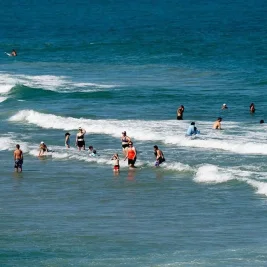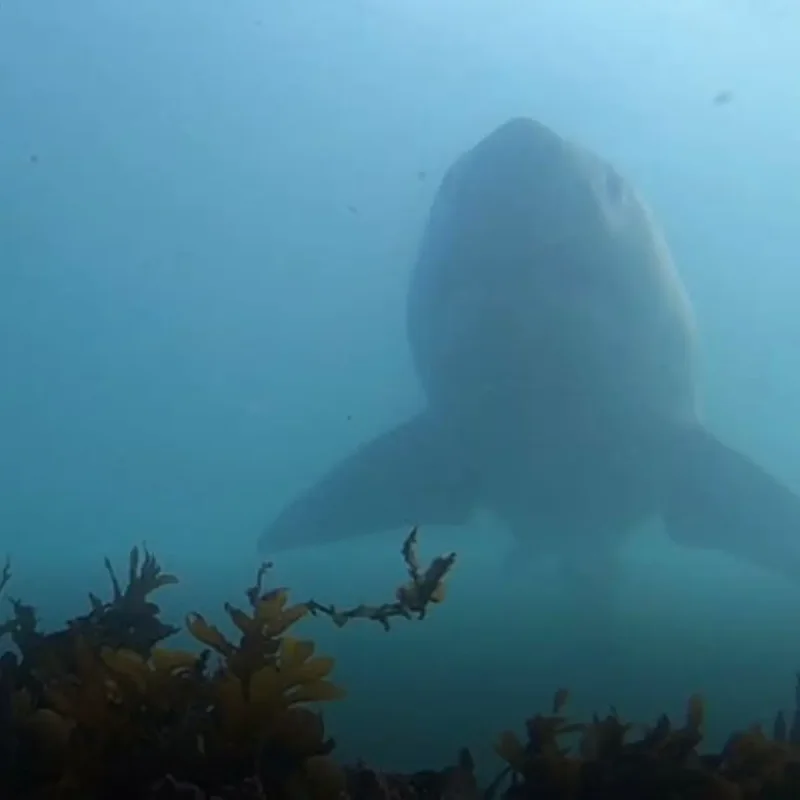
His team at the CSULB Shark Lab has been tagging and tracking juvenile great whites for 20 years.
In 2015 – an El Niño year that coincided with a marine heatwave known as the "Blob" – the lab saw "twice as many white sharks" along the California coast.
A few years later, on a trip to Baja California, a known white shark nursery, Lowe heard that fishers had seen almost no sharks in Mexico's waters that summer.
"When we have these El Niño conditions, it gets too warm, and the white sharks don't like it," Lowe said.
"And it pushes them into California."
Adult white sharks are massive, ranging from 10 to 20 feet in length. But most of those off California's coastline are juveniles.
White sharks are born as live young at about 5 feet in length.
A juvenile is classified as any shark between 6 and 9 feet from snout to tail.
The younger sharks spend much of their time closer to shore, migrating between areas with shallower waters where ample food is available.
Stingrays, fish, and squid are all on the menu.
Lowe says California waters will probably host a few more visitors than just white sharks while the water's warm.
In 2015, a big influx of smooth hammerhead sharks came up from Baja California, following schools of mahi mahi.
Whole suites of subtropical species – the food source for great whites – replaced the usual populations of squid, anchovies, and sardines, providing an El Niño buffet just off the coast of southern California.