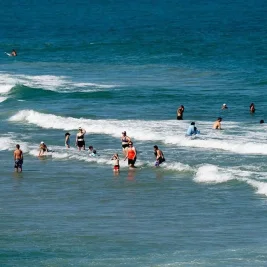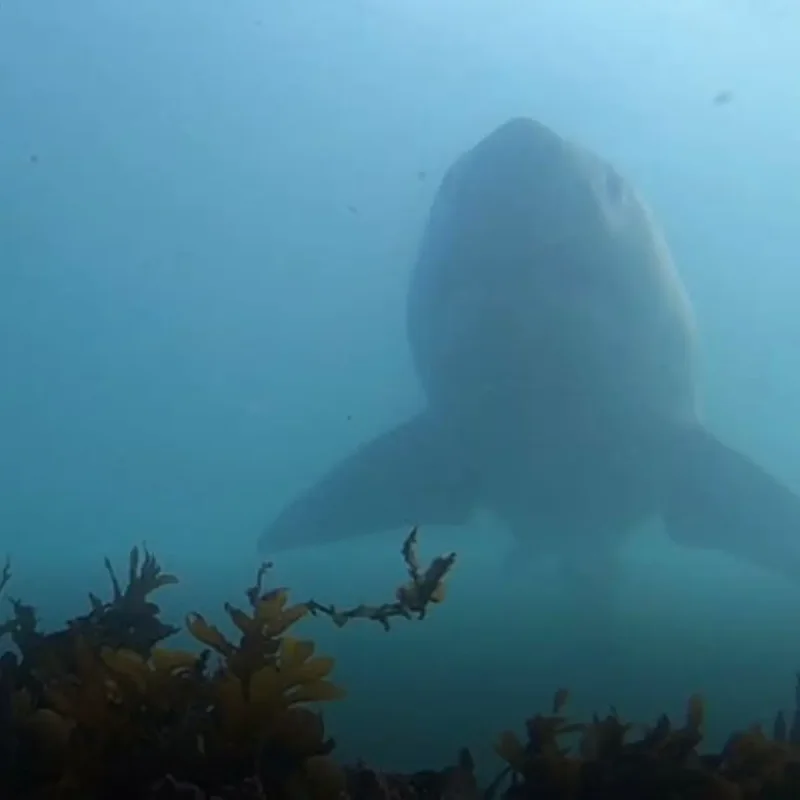
Both Lowe and Ugoretz stressed that shark bites remain a rarity in California, and fatal ones even more so.
There have been fewer than 250 shark incidents in the state since 1950 across all shark species, and just 17 of those were fatal.
More than 85% of those 250 incidents, however, involved white sharks. At the same time, white shark populations have increased due to widespread conservation measures.
"We always assumed that the more sharks and the more people you put together, the higher the likelihood of bites," Lowe said.
"But what we're seeing in California is actually the opposite."
"These sharks are around so many people, and they recognize that we're not prey."
Ugoretz said beachgoers should take comfort knowing that a sighting of a white shark remains a rare experience, like seeing a mountain lion or a bear on a hike.
Caution is needed, but you're in their territory.
"The one thing I always tell people about the ocean is: when you go into the wildness you might encounter a wild animal, just like when you go into a forest and maybe see a bear," Ugoretz said.
"If you do, you're probably lucky because you're seeing them at all. It's part of the diversity of the marine environment."
Lowe said if you asked him if the beaches were safe from shark incidents 10 or 15 years ago, he wouldn't have given you the same answer he does now.
"When I first started this work, lifeguards would ask me this exact same question: is it safe to be in the water with them?"