"I think from a purchase perspective, we’ll probably see a lot more conquest because it's moving from being a traditional hybrid to a BEV.
That area of the market is typically fleet dominated," said Franlin.
"So, we'd anticipate to have more conquest through fleet channels on the model.
From a sales perspective, around one in three sales being retail, around two in three sales being in a fleet space," he added.
"Target audience, probably owner drivers.
So, maybe within this we've got probably senior managers and executives choosing it as a company car, seeking that low Benefit-in-Kind taxation of four per cent," said Franlin.
"And then also maybe owner drivers as well. We think potentially it could go into kind of a chauffeuring space and luxury private hire operators.
It's got quite a compelling package from a chauffeuring proposition," he added.
Finally, regarding market competition and brand differentiation against global rivals, Franlin pointed to long-term reliability and manufacturing standards.
"I think this is a great question.
I think it's fair to say probably the market's never been so competitive, which is great news for customers.
Maybe not so much good news for manufacturers as it creates challenges for us," said Franlin.
"I think we're probably differentiating ourselves with a long-standing established model with ES. We offer continued exceptional quality, long-term reliability and the craftsmanship," he added.
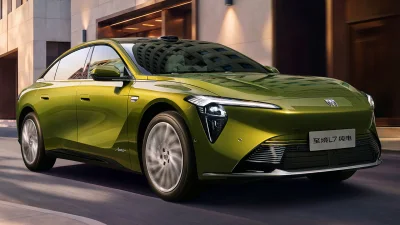
The 2026 ES lineup expands on previous generations by offering electric models alongside existing hybrid variants depending on the market.
DC fast-charging capabilities allow a 10% to 80% charge in 28 minutes on a 150 kW connection.