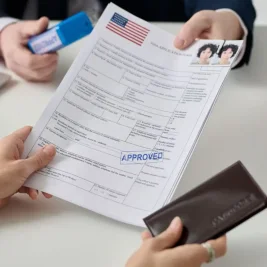
A federal appeals court issued a last-minute ruling on July 22, extending Temporary Protected Status protections and work permits for roughly 350,000 Haitian nationals in the United States through Monday, July 27.
The U. S.
Court of Appeals for the District of Columbia Circuit declined a Department of Homeland Security request to end the designation immediately.
The ruling follows a June 25 U. S.
Supreme Court decision that allowed the Trump administration to terminate TPS designations for Haiti and Syria.
That high court ruling overturned lower court stays, prompting intense legal maneuvering and congressional debate over the fate of Haitian immigrants across the country.
Impact on Florida and Ohio Communities
Local elected officials and economic leaders in Florida warned that letting the protections lapse would severely disrupt the regional labor force.
An estimated 158,000 Haitians reside in Florida under TPS, including 36,350 healthcare workers and 63,000 homeowners in South Florida.
In Springfield, Ohio, where Haitians comprise roughly one-quarter of the 58,000 residents, community leaders expressed deep concern regarding widespread business losses and potential neighborhood housing vacancies if residents face deportation or leave the area.
Political leaders and business advocates voiced contrasting views on the status of the program and the potential impact of its expiration.
"This week is the critical week for our future," said Daniella Levine Cava, Miami-Dade Mayor.
Business representatives emphasized the broader economic fallout for regional industries, particularly in South Florida.
"This decision will ruin entire ecosystems," said Candice Mondesir, of the Haitian American Chamber of Commerce of Florida.
Lawmakers offered differing approaches regarding executive administration decisions on immigration extensions.
"I would love for the administration to extend TPS for Haitians and Venezuelans," said Carlos Gimenez, U. S.
Representative.
"TPS was made for that.
You're sending people back to a failed state and you're sending people back to a country that's just been devastated by a natural disaster.
And so that's exactly what TPS is for, right?"
Legal advocates cautioned impacted individuals to prepare for potential legal changes and arrange personal affairs.
"That includes family preparedness items, such as guardianship, a power of attorney, having documents in order that help people to understand what will happen to your children, your business, your money, your bank accounts, anything that you have, your car, your house, we want to make sure that people are prepared for the worst," said Vanessa Joseph, of Catholic Legal Services.
Healthcare administrators warned that replacing certified workers in long-term care facilities will be exceedingly difficult given current labor shortages.
"People are hoping that there will be an opening and there will be reasonableness and there will be a human side to governance that will see … the value of employing individuals and having neighbors who are Haitian TPS nationals, who for decades have contributed to the well-being of our South Florida economy," said Miriam Singer, CEO of Jewish Community Services of South Florida.
Registry operators noted the emotional bond between patients and their long-time caregivers.
"The family loves this caregiver and truly considers her part of the family, so keeping her in place was very important to them," wrote Marissa Sturner, regional director and co-operator of Better Healthcare LLC.
Care providers highlighted that losing trained staff will force agencies to hire less experienced workers.
"They are caught in a trap," said Carole Hirsch, owner of Prepare to Care — Emergency Companions.
"It’s expensive to hire qualified caregivers. It’s already harder than ever and the costs of care are so much.
Good aides are $30 to $45, compared to when I started (20 years ago) it was."
Business owners in immigrant communities maintained their commitment to working despite looming deadlines.
"The Haitian community here, we come here to work hard," said Ketlie Moise, owner of Keket Bon Gout restaurant.
Religious leaders described widespread anxiety among congregation members in affected areas.
"What I hear from most people is their plan is to just go in the house, lock the door and try to wait this out," said Carl Ruby, senior pastor of Central Christian Church.
"I think a lot of them are still hoping something's going to happen that will allow them to stay.
I don't think that's very likely, but it's just a waiting situation now."
Pastor Ruby reflected on the overall impact on local municipal growth and community stability.
"When Haitians arrived, that was the first time Springfield had grown in half a century," said Carl Ruby.
"New businesses were coming here, existing businesses were expanding."
He expressed sorrow over the sudden uncertainty facing long-time community members.
"I'm grieving what this means to Haitians who have become my dear friends and who are members of my church, but I'm also grieving for our city," said Carl Ruby.
"It's just a huge loss, and it was totally unnecessary."
Attorneys involved in challenging the TPS termination pointed out that protected individuals maintain clean legal records and hold steady jobs.
"There's a reason that the business community in Springfield and elsewhere wants them there," said Geoff Pipoly, attorney.
Local property organizations noted the existing challenges in managing vacant tax-foreclosed properties.
"With vacant lots, I know that we have tax-foreclosed properties, which is a number that we use quite often that means they are officially been left, so about 500 parcels in Clark County primarily in the City of Springfield," said Kara Van Zant, assistant executive director for the Clark County Land Bank.
Land bank officials stressed the substantial financial costs required to remediate abandoned parcels.
"It’s incredibly expensive," said Ethan Harris, Clark County Land Bank Executive Director.
"Just a basic site of this is going to be a couple million dollars from beginning to end, full remediation."
Land bank directors noted that state funding remains critical to addressing ongoing property blight.
"If we didn’t have those funds coming down from the state, we would be stuck with all of those brownfields and blight in our community," said Ethan Harris.
The U. S.
House of Representatives passed legislation in April to extend Haitian TPS protections for three years, but the measure remains stalled in a U.
S. Senate committee ahead of the summer recess.