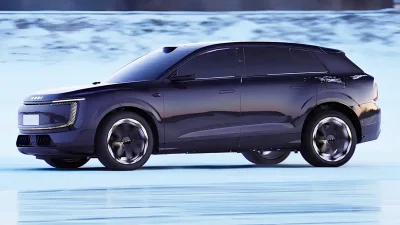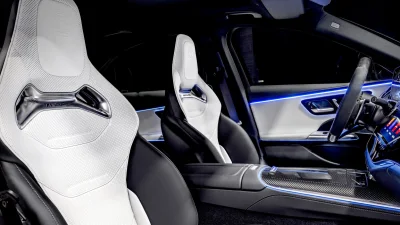
Mercedes-Benz is rapidly expanding its Hungarian operations, where production costs are 70 percent lower than in Germany, while simultaneously cutting jobs and capacity at its home base.
The automaker's Kecskemét factory has doubled annual capacity to 400,000 vehicles, making it Mercedes' largest European production site and second only to Beijing globally.
Cost Advantage Drives Expansion
Mercedes calculates Hungarian production costs are 70 percent cheaper compared to Germany, according to Handelsblatt.
Eurostat figures put industrial labor costs at €49.50 ($56.60) per hour in Germany versus just €15.60 ($17.80) in Hungary.
Hungarian employees also work significantly more hours annually due to fewer public holidays and a standard 40-hour work week, while German auto workers have been on 35-hour weeks since the mid-1990s.
The Kecskemét plant, which built its first car 14 years ago, currently employs around 5,000 people and is adding another 3,000.
Premium Models Head to Hungary
The C-Class is now being assembled in Hungary alongside the GLB, while the upcoming compact G-Class will be produced exclusively there.
The GLC, Mercedes' best-selling model line, is also planned for the factory.
Back in Germany, around 18,000 workers recently protested after Mercedes tightened its cost-cutting plans.
Management wants labor costs down, including reviewing special payments and getting more from employees for the same money.
Mercedes isn't alone. Volkswagen has shifted Passat production to Slovakia, and European Golf production is heading to Mexico in 2027.
Porsche Takes Opposite Approach
Porsche, however, is considering moving Cayenne production from Slovakia to Leipzig, where the smaller Macan is already made.
New boss Michael Leiters believes German manufacturing remains central to what buyers expect from Porsche. “We must reinvent ‘Made in Germany’ and prove ourselves,” Leiters said in June.
“Ultimately, that will determine whether we are successful.”
Bringing Cayenne production home depends on German workers accepting lower pay, while Porsche could cut thousands more jobs by 2035.
Mercedes production chief Michael Schiebe told Handelsblatt the expansion “helps us to secure jobs in Germany,” insisting “This isn’t about Hungary versus Germany.”
But with German automakers under pressure from falling profits and increasingly competitive Chinese rivals, the bigger question remains: How much is 'Made in Germany' actually worth, and who's prepared to pay for it?