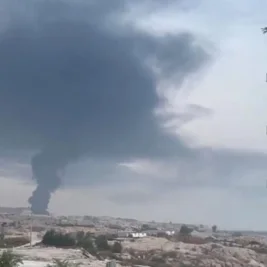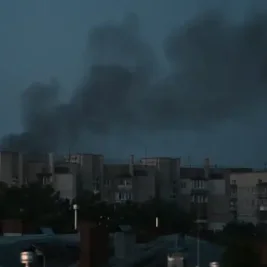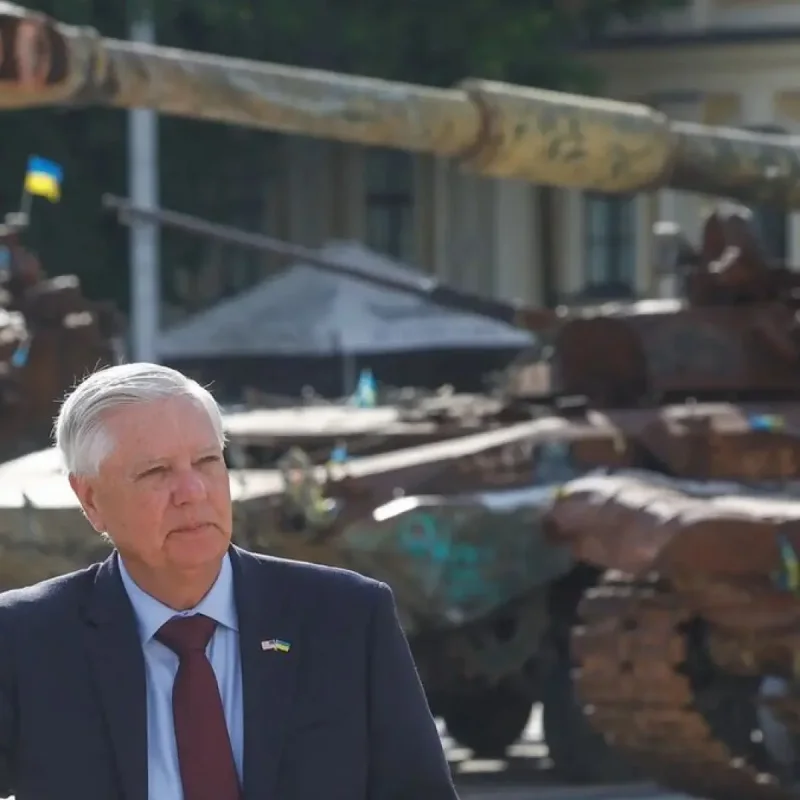
Romanian F-16 fighter jets shot down three Russian drones over Romanian territorial waters in three consecutive days ending Sunday, July 26, 2026.
The intercepts mark a sharp shift in NATO's tactical response to airspace incursions along its eastern flank.
The military interventions followed a series of drone violations since Russia's invasion of Ukraine in February 2022.
Romanian authorities scrambled jets from the Fetești airbase under NATO command after confirming the unmanned aerial vehicles were of Russian origin, including a Shahed-type model.
Diplomatic and Military Response
In response to the violations, Romania's Foreign Ministry summoned the Russian ambassador to Bucharest on Monday and expelled a Russian diplomat, giving them five days to leave the country.
At least 19 drones entered Romanian airspace this year alone, with 50 total incursions or debris findings recorded since 2022.
Romanian President Nicusor Dan strongly condemned the repeated breaches. "It is unacceptable and intolerable for the Russian Federation to continue violating Romanian airspace," he said.
He emphasized the joint response with allies: "Such actions are unacceptable and we treat them with all seriousness, together with our allies."
Romanian military officials noted that the tactical shift to destroy incoming threats developed after Romanian pilots successfully shot down a stray drone over Estonia in May while deployed on a NATO mission in the Baltic region.
Beyond using F-16 fighters, Romania and Poland have acquired the MEROPS counter-drone system, which deploys short-range counter-drones to neutralize incoming targets at low costs across NATO's border zone.
NATO leadership affirmed that the deployments demonstrate the alliance's constant readiness.
"As we continue to prove, NATO is constantly on the watch and prepared to defend itself from any threat," said Col.
Martin O'Donnell, spokesperson for NATO's Supreme Headquarters Allied Powers Europe.
European allies echoed support.
"Belgium stands firmly with Romania after several drones were shot down over its territory in the past days.
Romania’s investigation has already confirmed that one of them was a Russian Shahed drone," said Belgian Foreign Minister Maxime Prévot.
Evidence and Denials
Romanian officials presented recovered drone fragments directly to Russian diplomats.
"The Russian side learned what they already knew: the drones downed on Romanian territory belong to them," said Foreign Minister Oana Toiu.
She added: "Drone fragments recovered by the Ministry of National Defence and the ongoing prosecutor investigation confirm their Russian origin beyond any doubt."
The Russian Embassy in Bucharest issued an official denial and criticized the diplomatic expulsion. "An unprovoked expulsion of a Russian employee will not go unanswered," the embassy said.
Military analysts pointed to an earlier incident in May, where a stray drone struck an apartment block in Galati, as the primary catalyst for changing Romania's engagement rules.
"This was somehow a kind of psychological trigger, in order to say: ‘OK, enough is enough,’" said Radu Tudor, Romanian military analyst.
Tudor highlighted the wider implications for alliance strategy across Eastern Europe.
"Until now, it probably was an Allied decision in NATO not to respond with firepower, because it was somehow a danger of escalation," he said.
He added that the incidents represent a unified policy adjustment: "I think it’s not only a change of attitude of Romania, I think it’s a change of attitude in NATO."
Tudor noted the significance of Russia's actions along the border areas. "They saw so many signals that Russia is trying to provoke NATO," he said.
He emphasized Romania's unique operational role: "Romania is the only NATO country who shot down four drones on the eastern flank — three on Romania and one in Estonia."
Romanian defense officials clarified that the tactical updates aim strictly at airspace defense without broadening the scope of conflict.
"We recorded more than 100 attacks with drones near our border with Ukraine, and many of them resulted in debris or even drones that penetrated our airspace," said Cristian Popovici, head of public relations for the Romanian Defense Ministry.
He explained that pilot training adapted rapidly: "Our pilots and our air force, we developed the tactics, procedures, and now we can face and we can eliminate this threat."
Defense ministry representatives stated that recent engagements demonstrated full operational effectiveness. "100% rate success in three days with three drones," Popovici said.
He reinforced that Romania remains focused on maintaining peace: "We are in a peacetime, we are not involved in this fight."
He added that any potential escalation depends entirely on choices made by Moscow: "If Russia wants to escalate with NATO, it’s up to them.
I’m not sure it’s a wise move now."
The Russian government maintained that its forces do not target foreign soil, denying all accusations of deliberate airspace violations in official statements.