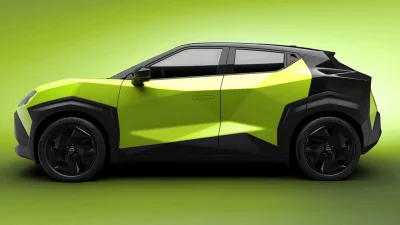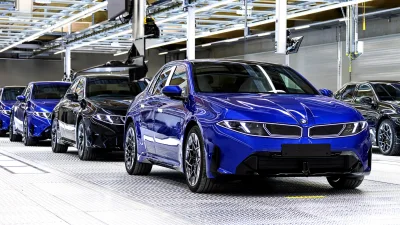
Lexus has officially launched the eighth-generation ES luxury sedan, introducing all-electric powertrains and enhanced safety features to compete in the premium executive segment.
The new lineup, built on the rigid TNGA GA-K platform, includes the front-wheel-drive ES 350e and the dual-motor, all-wheel-drive ES 500e.
The base ES 350e features a single permanent-magnet motor generating 221 horsepower and 198 lb-ft of torque, powered by a 74.7-kWh NMC lithium-ion battery.
Meanwhile, the ES 500e utilizes dual motors producing a combined output that accelerates from 0 to 100 km/h in 5.5 seconds.
Design and Interior Upgrades
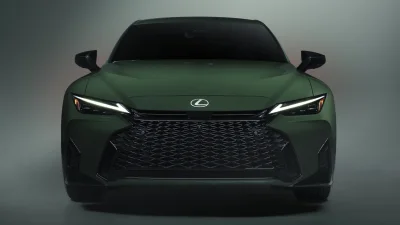
The electric sedan adopts design cues inspired by the LF-ZC concept, replacing the traditional spindle grille with a cleaner front profile and L-shaped twin signature lamps.
Inside, the cabin features new bamboo trim panels with surface illumination, hidden tactile controls on the steering wheel, a 14-inch touchscreen infotainment display, and a 13.3-inch driver console.
Alex Franlin, Product Manager for Lexus UK, explained how testing environments shaped the chassis tuning.
"Not specifically for UK roads, but what we wanted to share here was that the vehicle was designed and tested at the technical centre in Shimoyama, Japan," said Franlin.
"This is where all Lexus product is now designed and tested.
And there are a number of race tracks and other road surfaces that mimic UK roads and different driving environments, including uneven surfaces along with cobbles and challenging roads.
And so it has been fine-tuned to cope," he added.
Franlin emphasized the brand's policy regarding its suite of safety technologies across all equipment levels.
"We've always offered Lexus safety system as standard in the vehicle. We believe it shouldn't be an optional extra," said Franlin.
"We think everyone should have access to the driver assistance and safety technologies, and it shouldn't be an additional premium regardless of which grade they're choosing," he added.
Highlighting focus areas based on driver input, Franlin noted key cabin and technology upgrades.
"Oh, a huge amount. So ES has improved along those eight generations.
It's always been showcasing the highest levels of Lexus innovation," said Franlin.
"It's highly regarded for comfort, quality and refinement.
But the areas we wanted to focus on, which we saw could be improved, were performance, infotainment, and then connectivity as well," he added.
"So, a lot of what I've talked about today is that new multimedia screen, the new combi-meter, the new steering wheel design, and increased speed of connection to our Lexus Link app - it's now four times faster," said Franlin.
Regarding why buyers would consider the new executive sedan, Franlin outlined the ownership package and passenger orientation.
"I think someone should buy the ES because it mixes comfort, refinement, and reliability - all things you'd expect from Lexus," said Franlin.
"It's designed with the design principles of Omotenashi anticipating the needs of the driver. But in this case, the passenger as well.
It's a very luxurious environment to be in," he added.
"Beyond the vehicle itself as well, it's also got ownership reassurance.
So you've got the Lexus Battery Care and the Lexus Warranty Programme, which can give you battery care of up to 10 years or a million miles," said Franlin.
"And also the warranty will be three years, but for every year you bring it into a Lexus centre for it to be serviced, you'll get an additional one year service," he added.
"The final bit I'll add to that as well is if you're purchasing it via a retail route, you can take benefits of a zero per cent APR, £1,000 deposit contribution, and a complimentary Lexus wallbox as well," said Franlin.
Addressing the interior interface and the omission of a one-pedal driving mode, Franlin noted that customer feedback guided the decision.
"It's a really simple environment now. You've got the new gear control, which is very refined.
As I say, the right buttons are still in the steering wheel," said Franlin.
"You have the Hidden Switches and the combi-metre as well. We've listened to customer feedbacks and improved those intelligent features.
The reason there's not a one-pedal drive mode is because of customer feedback," he added.
"They prefer the feel of steering wheel paddles and the traditional brake pedal, and that’s what we listened to and took note of," said Franlin.
Discussing target demographics and fleet sales, Franlin explained expected channel distribution.
"I think from a purchase perspective, we’ll probably see a lot more conquest because it's moving from being a traditional hybrid to a BEV.
That area of the market is typically fleet dominated," said Franlin.
"So, we'd anticipate to have more conquest through fleet channels on the model.
From a sales perspective, around one in three sales being retail, around two in three sales being in a fleet space," he added.
"Target audience, probably owner drivers.
So, maybe within this we've got probably senior managers and executives choosing it as a company car, seeking that low Benefit-in-Kind taxation of four per cent," said Franlin.
"And then also maybe owner drivers as well. We think potentially it could go into kind of a chauffeuring space and luxury private hire operators.
It's got quite a compelling package from a chauffeuring proposition," he added.
Finally, regarding market competition and brand differentiation against global rivals, Franlin pointed to long-term reliability and manufacturing standards.
"I think this is a great question.
I think it's fair to say probably the market's never been so competitive, which is great news for customers.
Maybe not so much good news for manufacturers as it creates challenges for us," said Franlin.
"I think we're probably differentiating ourselves with a long-standing established model with ES. We offer continued exceptional quality, long-term reliability and the craftsmanship," he added.
The 2026 ES lineup expands on previous generations by offering electric models alongside existing hybrid variants depending on the market.
DC fast-charging capabilities allow a 10% to 80% charge in 28 minutes on a 150 kW connection.