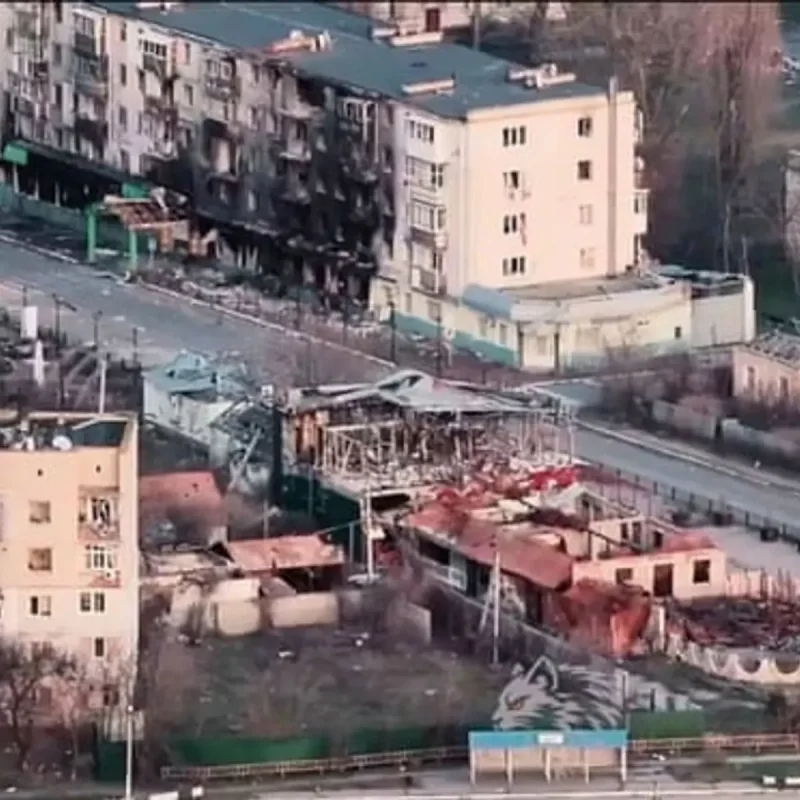
Ukrainian military units carried out a large-scale drone operation to deliver nearly four tonnes of emergency supplies to the Russian-occupied town of Oleshky in Kherson Oblast.
The airdrop targeted roughly 2,000 trapped civilians facing an escalating starvation crisis, local authorities reported.
Marine, border guard, and national guard formations synchronized the effort, dropping food, water, and medicines across 100 distribution sites on the Russian-controlled left bank of the Dnipro River.
Blockade Since May 2026
The town has faced severe supply shortages since May 2026, when expanded minefields and heavy drone coverage cut off remaining ground access.
Isolated residents have been forced to consume garden weeds and face extreme malnutrition.
Regional officials stressed that the aerial operation was necessary due to the complete blockade and ongoing destruction of ground delivery vehicles by occupying forces.
Oleksandr Prokudin, Kherson Oblast Military Governor, said civilians have no connection to the Ukrainian armed forces.
"Because of the conditions you have created in Oleshky, people simply have no choice but to take food.
Do not deprive people of the chance to survive and avoid starvation," Prokudin said.
Prokudin noted that Russian troops actively prevent civilian relief, targeting delivery vehicles and obstructing systematic evacuation agreements.
"Russian occupying forces are obstructing the provision of aid to the civilian population. They are destroying vehicles attempting to deliver humanitarian supplies.
And they are killing people trying to bring in food and medicines," he added.
He also said Russian forces are blocking all initiatives and agreements regarding the evacuation of people from Oleshky.
Diplomatic appeals to break the siege have intensified at international forums as conditions deteriorate across the flooded and damaged infrastructure of the district.
Andrii Sybiha, Foreign Minister of Ukraine, said there is almost nothing left to eat.
"Reports indicate that civilians are being forced to survive on grass and weeds, while medicines, clean water, electricity, and medical care are increasingly out of reach," Sybiha said.
Sybiha called on international organizations to exert pressure on Moscow to establish safe humanitarian corridors for the remaining population.
"Children are trapped in these conditions too," he added.
The diplomatic push follows warnings regarding the severe denial of humanitarian access under international humanitarian standards.
"People there cannot survive on statements of concern. Humanitarian access and safe evacuation must become a reality, because every day matters," Sybiha stated.
Russian authorities have blamed Ukrainian military operations for the breakdown in logistics across the region.
"Yes, there really are problems with delivering food, medicines and so on there. The Kyiv regime is literally doing everything to obstruct these deliveries.
Drones hang in the air constantly, killing people. The situation is truly critical," said Dmitry Peskov, Kremlin Spokesperson.
Peskov maintained that Russian military units were attempting to address the local shortages despite active fighting.
Local administrative leaders on the Ukrainian-controlled western side of the river highlighted that basic municipal services and access routes remain entirely non-functional.
"The density of the minefields has become very high," said Tetiana Hasanenko, Head of the Oleshky Military Administration.
Hasanenko pointed out that winter agricultural conditions and destruction of local storage have eliminated local food sources.
"From December onwards, food deliveries became much less frequent because vehicles were hitting mines and being targeted by drones.
By winter, supplying food had already become very difficult," she explained.
Systematic aerial deliveries by unmanned vehicles across the Dnipro River remain the primary lifeline for the town as international organizations seek access.