
One attendee said it was motivating to see people move outside their comfort zone, even if nervous or scared.
They would need to embrace discomfort again to defend democracy.
Preparing for Uncertainty
Threats to elections are already playing out. Louisiana threw out tens of thousands of votes to redraw maps diluting Black voting power.
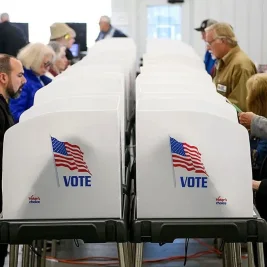
Republican leaders have said they want immigration agents or troops at polling places.
The federal government has seized ballots in Georgia in an endless quest to prove fraud in the 2020 election.
What defending democracy could look like on the ground isn't exactly clear.
It could be get-out-the-vote efforts, signing up as election judges, or monitoring polling places for immigration agents.
It could be protesting or lobbying local officials if they face pressure to undermine the vote.
All these conversations could come up on a neighbor's doorstep when asked what they'd be willing to do if someone attacks the vote.
The group worked through a scenario: the Department of Justice announced in August 2026 that voters needed to appear on newly issued federal voter rolls, causing confusion just before early voting.
A trainer asked what they should do and how an organized network could respond effectively.
One person said the federal government couldn't move that fast—a natural reaction, the trainer noted, because people want to argue away the threat.
Another said they would get loud and make sure Minnesota's elected leaders did the same.
Emilia González Avalos, executive director of Unidos MN, acknowledged that conversations with neighbors can be difficult, especially if there are political disagreements, but there is value in "breaking down the dehumanization amongst us as an exercise of power building."
The strength built block by block will be reflected to defend access to the polls and ensure results are ratified, she said.
>>> Jose Alvarado Re-Signs with Knicks on Three-Year, $14M Deal
"We don't need perfect leaders."