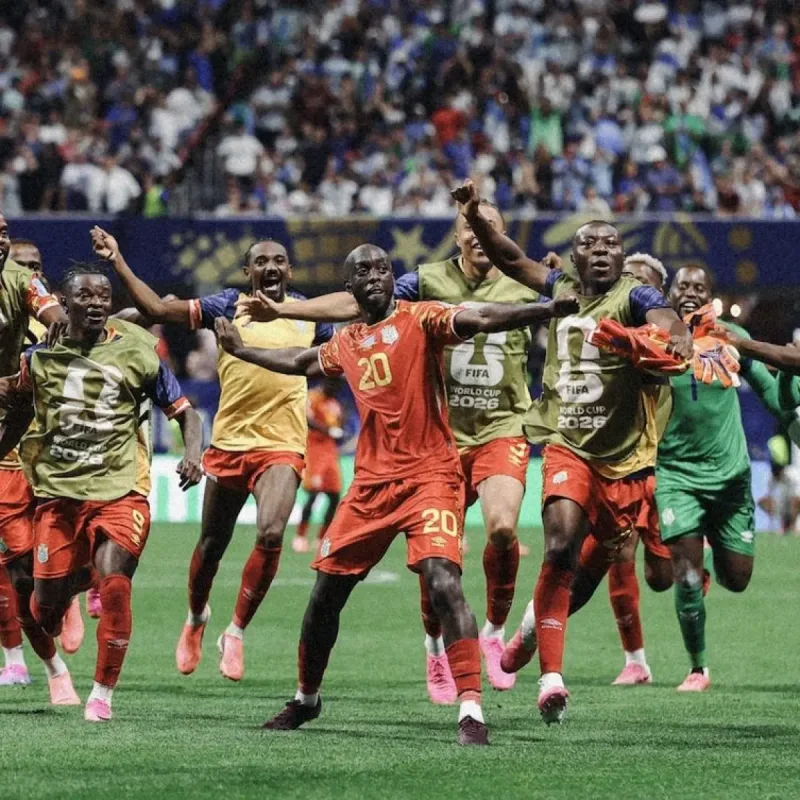
England will face the Democratic Republic of Congo for the first time in senior international history on Wednesday in Atlanta during the World Cup round of 32.
The historic knockout match features a stark tactical contrast as the African nation enters its first-ever World Cup knockout phase.
According to a report by the Telegraph, the Democratic Republic of Congo advanced as one of the best third-placed teams after competing against Portugal, Colombia, and Uzbekistan.
Defensive Solidity
The team relies on a robust defensive structure that conceded only two goals during the Africa Cup of Nations before duplicating that stability in North America.
The Congolese squad utilizes a 5-3-2 formation featuring several prominent Premier League players.
Former Manchester United defender Aaron Wan-Bissaka operates at right wing-back alongside central defenders Axel Tuanzebe, Steve Kapuadi, and former Newcastle United player Chancel Mbemba.
Telegraph analysts noted that this experienced backline successfully limited both Portugal and Colombia to less than one expected goal during the group stage.
While Portugal maintained 75 percent possession, they managed only three shots on target against the compact defense.
Counter-Attacking Threat
Offensively, the African team deploys an old-school strike partnership consisting of Newcastle United forward Yoane Wissa and 35-year-old Real Betis striker Cédric Bakambu.
This combination will test England central defenders Ezri Konsa and Marc Guéhi in potential two-on-two counter-attacking situations.
The tactical setup will likely grant significant possession to England, allowing full-backs more space on the flanks.
However, England manager Thomas Tuchel must navigate defensive vulnerabilities at the back post, where analysts suggest wide players like Marcus Rashford or Nico O'Reilly could exploit positional spaces.