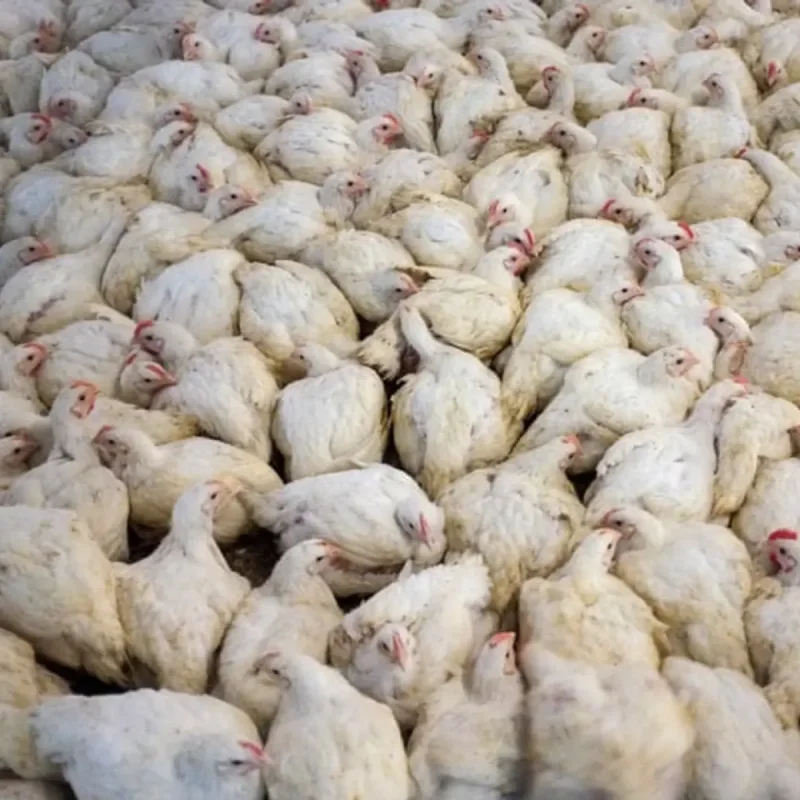
The global population of farmed mammals and poultry has increased by 50 percent over the past two decades, intensifying pressure on natural ecosystems, according to a report cited by The Guardian.
Research from the Stop Financing Factory Farming alliance indicates that cropland used for livestock feed has expanded by roughly 25 percent, accelerating wildlife loss and environmental harm.
The rising demand for meat coincides with severe agricultural degradation, with an area equivalent to the size of Canada losing its fertility.
Meanwhile, animal feed irrigation accounts for 90 percent of withdrawn water.
The findings update key aspects of the UN Food and Agriculture Organization's seminal report, Livestock’s Long Shadow, revealing that most global agricultural trends are moving in a negative direction.
Peter Stevenson, chief policy adviser at Compassion in World Farming, said efficiency gains are often completely erased by the rapid expansion of livestock populations.
“There’s been a huge increase, and it’s simply because there are so many more livestock now,” he stated.
Global livestock emissions grew by over one-fifth between 2001 and 2023.
The total number of farmed animals reached 94.9 billion in 2023, compared to 61.8 billion in 2006.
Escalating chemical fertilizer use and slurry dumping have created massive aquatic dead zones, notably in the Gulf of Mexico, where marine life faces widespread destruction across a vast area.
Demands for Investment Shifts
Merel van der Mark, head of animal welfare and finance at Sinergia Animal, emphasized that reversing planetary damage requires a global shift away from intensive meat-heavy diets.
She urged publicly funded development banks, which allocated 1.23 billion dollars to intensive operations in 2024, to immediately adjust their financial criteria.
“This means a shift away from industrial livestock production, which multilateral development banks must support by stopping financing factory farming and instead aligning their financial flows with a more sustainable world,” she said.