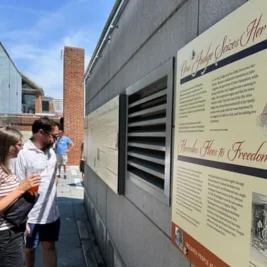

Slavery is just a moment and life is a journey," LaNier said.
LaNier praised the Monticello estate for opening exhibits in 2018 that detail the lives of the enslaved families who built and maintained the property.
"A lot of historical institutions can learn a lot from Monticello … they're telling what happened: the good, the bad and the ugly, because you can't have one without the other.
You need a full story and context," he said.
The anniversary brings historical questions to the forefront, echoing old inquiries about the true meaning of freedom. "What to the Slave is the Fourth of July?"
asked Frederick Douglass in an 1852 address.
>>> Calgary Announces Downtown Road Closures for 2026 Stampede Parade
LaNier explained that celebrating Independence Day remains vital to honoring the contributions of Black Americans.
"Some people in the Black community don't want to celebrate July 4 because they say we have Juneteenth and we weren't really free then.
But it's just as important to celebrate July 4 because, if we did not, it would make all the blood, sweat and tears of our ancestors in vain," he said.
He noted that people of color played an indispensable role in the manual labor that constructed the early republic.
"It's important that people know how involved people of colour were in the founding of this country, that we would not have a 250-year anniversary without people of colour slaving and labouring constantly," LaNier said.
He stressed that key national landmarks and presidential documents relied heavily on enslaved labor. "Who do they think built the White House?