Staatsbosbeheer, the Dutch forestry organization, announced on July 5, 2026, that it will close all seven of its outdoor visitor centers across the Netherlands.
The decision stems from structural financial losses, with the organization aiming to redirect funds toward core nature conservation tasks.
The affected centers include De Pelen, Almeerderhout, Oostvaardersplassen, Schoorlse Duinen, Sallandse Heuvelrug, Drents-Friese Wold, and Boomkroonpad. Together, they attract approximately 1.3 million visitors annually.
Since national subsidy cuts in 2014, Staatsbosbeheer has funded these centers internally, leading to ongoing deficits. Rising staff and building maintenance costs have exacerbated the financial strain.
Timeline and Impact
The final closures are projected for January 1, 2027.
However, the Almeerderhout center will shut down earlier, on July 26, 2026, due to low visitor numbers after its catering services departed.
The works council must review the proposal and deliver advice by October 1, 2026, before a definitive decision is made.
A total of 23 employees and 350 volunteers are affected, though Staatsbosbeheer stated that no forced redundancies will occur.
Alternative roles and future scenarios for each building are being assessed.
Public information services will transition to localized, digital formats integrated into daily field operations, replacing traditional desks.
“As long as the costs we incur for nature management are higher than the subsidy we receive for it, our priority is to manage those nature areas as optimally as possible,” Staatsbosbeheer stated on its website.
The organization emphasized that resource allocation must align with pressing ecological challenges and national sustainability targets.
“Also because good nature management contributes to the recovery of biodiversity and to the solution of (the social consequences of) the nitrogen problem,” the organization added.
To maintain public engagement, Staatsbosbeheer plans to collaborate with local schools, municipalities, and educational partners like IVN Natuureducatie.
The future model will be “close to the area and more integrated into daily work, supported by digital information provision.”
The impact will be felt heavily at regional hubs such as the Appelscha location in the Drents-Friese Wold, which employs three staff members and utilizes 60 volunteers.
“For them it is a hard blow,” said Marcel van Dun, spokesperson for Staatsbosbeheer, as reported by Omrop Fryslân.
He noted that the long-standing operation had fostered a tight-knit community among local personnel.
“I can imagine that if they have been standing in that store for years, it is difficult if it has to be stopped all at once,” Van Dun said.
Operational changes at the site are scheduled for the start of 2027.
“The starting point of the proposed decision is that as of January 1, no more people will work there,” he clarified.
The organization hopes external parties or regional political entities might intervene to preserve the community hubs.
“We receive many reactions from people who think it is a pity that such a beautiful reception center will disappear.
We hope that politics will perhaps take action,” Van Dun stated.
The highly popular Schoorlse Duinen center, which draws 350,000 annual visitors and has operated for 46 years, faces a similar transition.
Representatives are seeking alternative regional functions for its infrastructure. “We are looking at other options to continue the activities,” Van Dun told NH Nieuws.
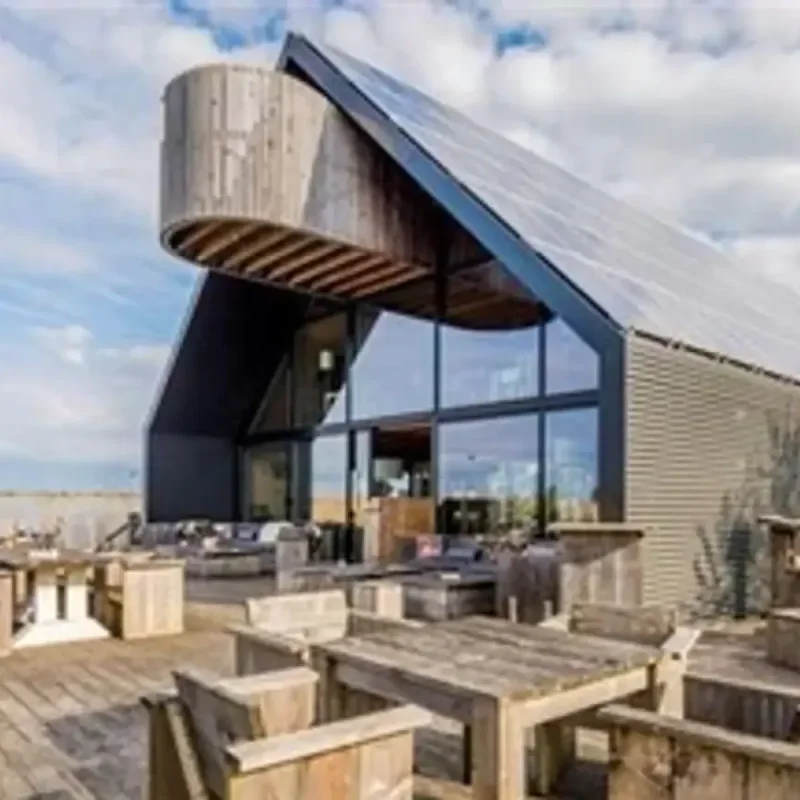
The facility serves as a prominent regional landmark adjacent to the dunes, featuring conference rooms and a brasserie.
“It is a very valued starting point of walking and cycling routes,” he said.