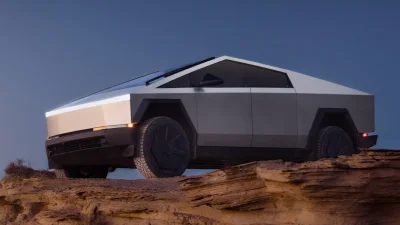
Tesla has commenced on-road testing of a production-version Cybercab without a steering wheel or pedals in Austin, Texas.
The company is simultaneously ramping up manufacturing of the purpose-built robotaxi at Giga Texas.
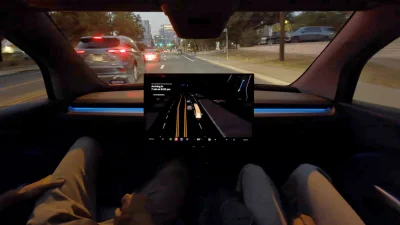
A video posted on X showed the two-seat vehicle operating with a safety monitor positioned in the front passenger seat.
The testing comes nearly two years after the initial design reveal.
Unique Mechanical Layout
Technical analysis of regulatory documents by Not a Tesla App revealed that the Cybercab features an unprecedented front-wheel-drive configuration combined with a staggered wheel setup.
The front axle operates on 18-inch rims with 215/60 R18 tires, while the rear axle utilizes massive 21-inch wheels wrapped in 225/60 R21 tires.
This mechanical layout represents a departure from previous Tesla vehicle platforms.
The design prioritizes utility and fleet efficiency over traditional performance logic, using a heavily tapered teardrop shape to minimize aerodynamic drag.
Emergency Response Guide
Newly released First Responder's guides outline specific autonomous behaviors, including alternate hazard light patterns.
Standard hazard flashes indicate normal passenger pickups or drop-offs, while a rapid flash at double the speed signals that autonomous modes have been disabled due to connectivity or hardware issues.
The emergency documentation notes that the Cybercab can autonomously pull over to safe locations when detecting trailing emergency vehicles with active lights and sirens.
The vehicle is also programmed to follow pathways designated by traffic cones and respond to visible hand signals from first responders.
Despite the manufacturing expansion, broader autonomous deployment remains limited by software validation and safety constraints.
Elon Musk confirmed on an earnings call that expansion relies heavily on a rewritten Full Self-Driving software update, currently targeted for late 2026 or early 2027.