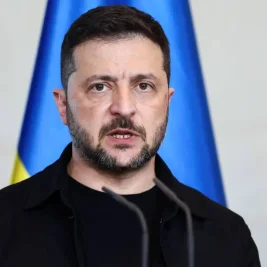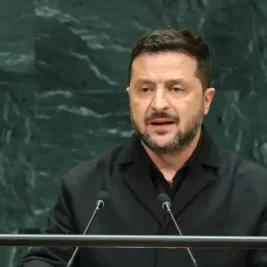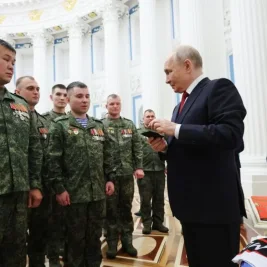
Russian President Vladimir Putin is assessing his strategic military options in Ukraine and across Europe as NATO leaders convene for a high-profile summit in Ankara this week.
The conflict, now in its fifth year, has severely strained the Russian economy and placed the Kremlin leader in a precarious political position.
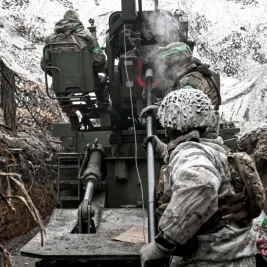
According to CNN, mid-range and long-range bombardments from Kyiv have caused domestic gas shortages and visible damage across Moscow's skyline.
The persistent threat has raised concerns among alliance members that Russia could launch hybrid warfare operations or limited drone incursions against NATO nations, including Poland, Estonia, and Denmark.
Economic and Military Pressures Mount
Ukraine continues to target Russian oil refineries with drone strikes, forcing the hydrocarbon-producing nation to import gasoline.
The Kremlin has depleted currency reserves to stabilize the economy and has increasingly relied on manpower from prisons, alongside practical military assistance from Iran and North Korea.
Despite these vulnerabilities, Moscow has reorganized its domestic factories to continuously supply the war machine, devoting approximately 7% of Russia's gross domestic product and nearly half of the total state budget to the conflict.
Observers note that a wider confrontation with NATO could be used by the Kremlin to justify full-scale internal mobilization.
The Institute for the Study of War, a US-based think tank, suggested that recent false territorial claims by the Russian Ministry of Defense regarding the Donbas town of Kostyantynivka were specifically intended to influence diplomatic perceptions within the White House.