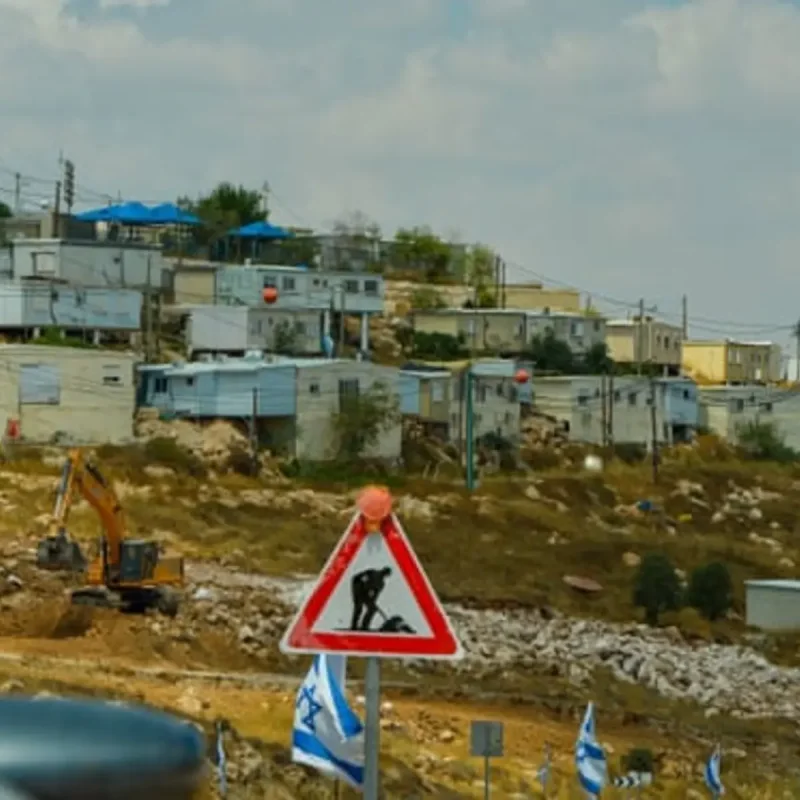
European Union foreign ministers are scheduled to discuss potential trade restrictions on Monday regarding goods from illegal Israeli settlements, as reported by The Guardian, amid growing pressure to align member states with international legal obligations.
The debate follows a leaked European Commission options paper that outlines three potential pathways: a partial or total import ban, prohibitive tariffs, or an import licensing system.
Immediate action remains unlikely as the 27-member bloc faces persistent divisions, particularly regarding whether a trade ban requires a unanimous vote or a qualified majority.
The policy document noted that these trade choices "can have a substantive impact on the EU-Israel relationship, also in view of the upcoming election", indicating the commission's awareness of Israel's legislative elections scheduled by October 27.
At least 10 member states, including Spain, Belgium, and the Netherlands, argue that the EU must end trade relations that support the occupation, following a 2024 International Court of Justice ruling.
The court stated that countries had to "take steps to prevent trade or investment relations that assists in the maintenance of the illegal situation created by Israel in the occupied Palestinian territory".
More than 100 legal scholars have backed this position in a letter sent to senior EU trade and foreign policy officials this month.
Ignacio García Bercero, a former senior trade official at the commission who signed the letter, stated: "The only way to ensure compliance with the opinion of the ICJ is a ban on trade with the illegal settlements.
Any other option will not be effective in view of Israeli policy to compensate settlement producers from tariffs paid on their exports to the EU."
An investigation by the NGO Global Echo recently revealed that one in six evaluated shipments contained agricultural goods originating from occupied territories, with 42 percent mislabeled as Israeli-grown.
Alberto Alemanno, a law professor at the HEC Paris business school, stated: "Each month of delay doesn't just postpone compliance, it deepens the EU's own legal liability for sustaining trade with an unlawful occupation."
A senior EU diplomat characterized the acquisition of the options paper as a difficult process, noting a lack of enthusiastic cooperation from the commission.
Claudio Francavilla, an associate director at Human Rights Watch, stated: "It is astonishing a ban is still presented as an 'option', when it's the only measure that complies with international law."
Following the conclusion of Monday's session, EU foreign ministers will not meet in a formal decision-making capacity until October.