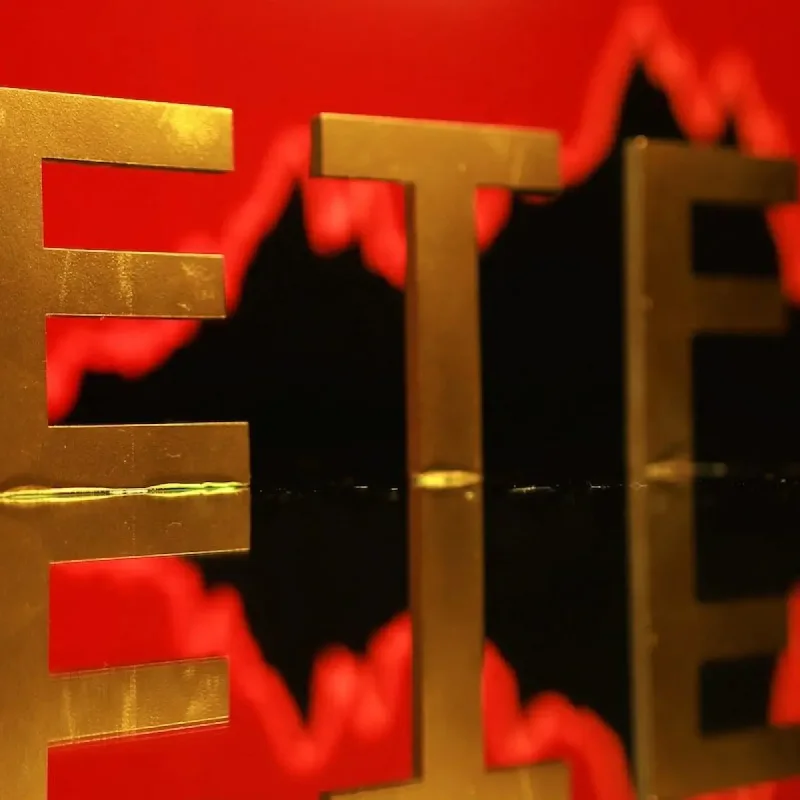
South Korean financial authorities announced emergency curbs on single-stock leveraged exchange-traded funds on July 29, 2026, following severe market volatility and retail losses in semiconductor stocks.
The measures include a potential 20% portfolio cap for retail investors, aimed at curbing excessive speculation.
The regulatory intervention comes after a steep decline in the Kospi index, which dropped 5.98% on Wednesday following a 10.84% fall in the previous session.
Retail capital heavily concentrated in chip giants was wiped out, with single-stock leveraged ETFs tied to SK Hynix collapsing over 80% from their June 23 peak.
Equivalent Samsung-linked leveraged funds fell nearly 75% from their early June high, according to LSEG data.
Since the introduction of single-stock leveraged ETFs on May 27, retail traders piled in with 14 trillion won ($9.7 billion) in net purchases, compared to just 2 trillion won by foreign investors, KB Financial Group data showed.
Addressing lawmakers in Seoul, Finance Minister Koo Yun-cheol issued an official apology regarding the hasty approval of the volatile trading instruments.
Financial Services Commission Chairman Lee Eog-weon signaled further tightening, stating that regulators may restrict individual access strictly to qualified institutional or accredited participants.
“If necessary, there is a way to raise [the investment requirements] up to professional investors,” Lee said.
Regulators are also evaluating lower tracking multiples for single-stock leverage offerings to curb extreme swings.
“Since [the tracking multiple of] two times is too large, lowering it would likely have an effect in terms of easing volatility,” Lee noted.
Lee added that officials would engage with market participants and evaluate structured transition pathways during legislative reviews.
Alongside the 20% asset limit, authorities plan to increase trading fees, require simulated trading sessions, and establish legal frameworks for emergency market stabilization modeled after Hong Kong’s regulations.
A previously scheduled safeguard requiring a minimum cash deposit of 30 million won ($20,646) will officially take effect on July 31, while round-the-clock market monitoring remains active.