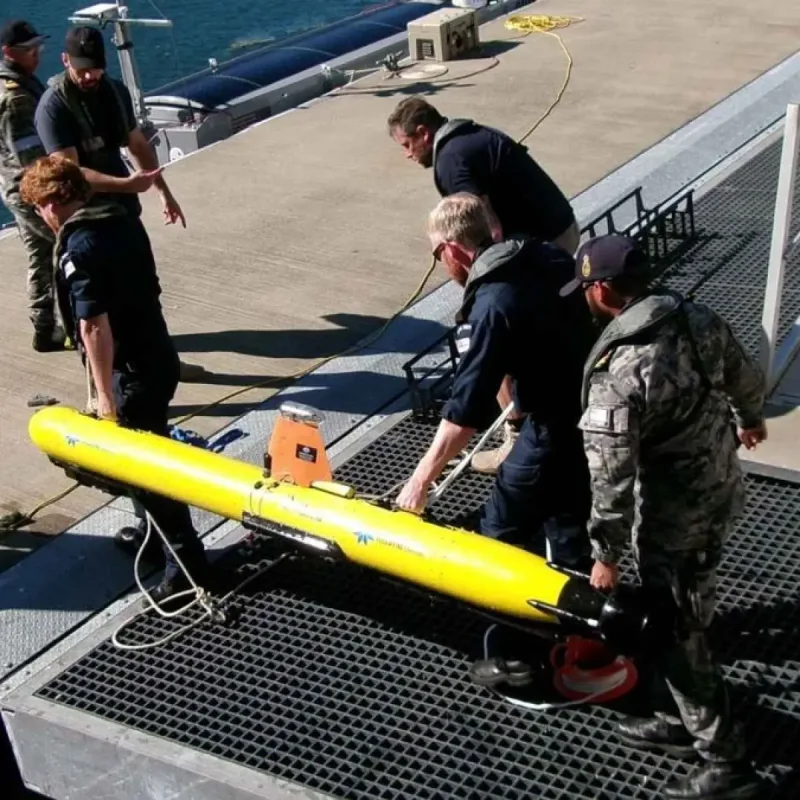
The deployment of camera equipment allowed the researchers to visually inspect the seafloor for the first time in six decades.
"That was a big moment for us, because suddenly we could actually see the seafloor," Zinzindohoué said. "I still remember seeing those first images.
It was a mix of excitement and disbelief, because after all this time thinking about this reef, suddenly there was something real in front of us."
Zinzindohoué emphasized that finding the living ecosystem challenges existing assumptions regarding West African marine biodiversity.
"I think what we found is probably not an exception," he said.
"It is more likely a reflection of how little we still know about coastal regions in West Africa and elsewhere.
If we were able to find this reef again after 60 years, how many others are still undocumented or simply forgotten?"
He noted that the current discovery represents only an initial step in understanding the broader Gulf of Guinea region.
"This is still an initial exploration," Zinzindohoué said.
"The historical reports suggested that this could be a continuous coral reef barrier extending roughly 40 kilometers parallel to the coast.
We only surveyed a small section of this area and we had a limited number of visual transects."
Zinzindohoué added that the site serves as a vital historical record for oceanographic research.
"For me, the most exciting part is about understanding the reef's history, and what it can tell us about how the ocean in this region has changed over time.