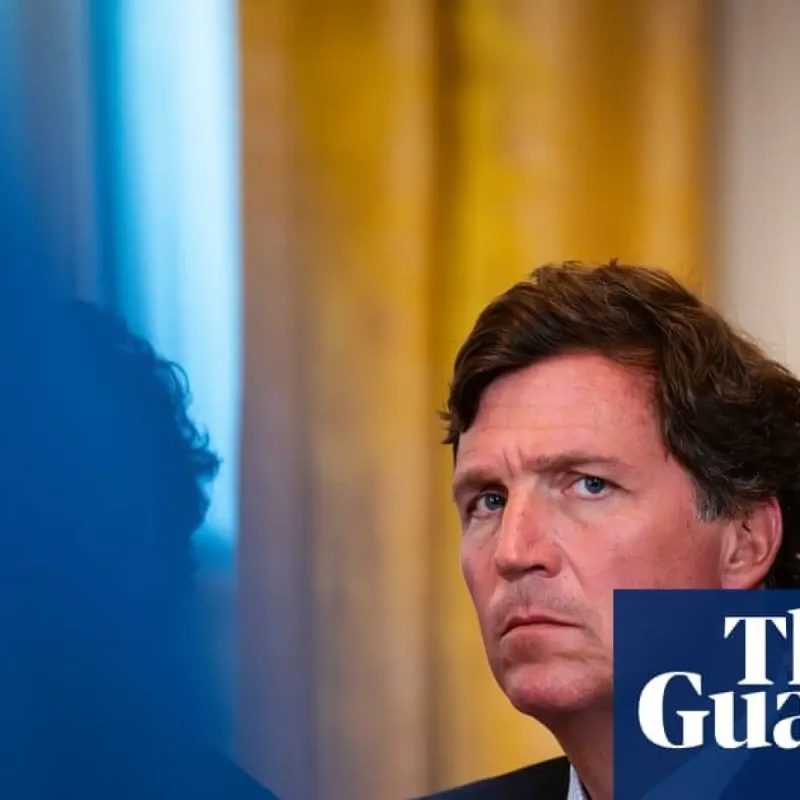
Right-wing broadcaster Tucker Carlson announced his intention to help establish a new political party in the United States during an interview published on Wednesday, as reported by The Guardian.
The former Fox News host clarified that he has no plans to run for office himself despite seeking to break the current two-party system.
Carlson expressed deep dissatisfaction with both major political factions, noting that he sees no path toward supporting either side.
He explicitly ruled out entering any upcoming races as a candidate under a new banner.
"I don't want to be a candidate," Carlson said.
The commentator highlighted his complete break from the existing political establishment, stating he would not back candidates from the traditional parties in the midterm elections.
He noted that his decision reflects long-standing frustrations with national leadership.
Carlson argued that the dominant political parties share identical stances on crucial national issues, which he believes undermines democratic principles.
He suggested that external influences have directed foreign policy decisions away from the public interest.
"I do know what really matters is war and finance," Carlson said.
He expanded on the necessity of an alternative party structure to address domestic economic challenges and reorder federal priorities.
Carlson emphasized that the government must pivot toward focusing entirely on the well-being of its domestic population.
"I'm going to help build a third party. There should be a good-faith effort to figure out what benefits the country.
I mean, if you make $60,000 a year, you're degraded. Your life expectancy has gone down, and the promise of your children's lives is likely gone.
[…] I officially don't care about Hamas. The US government should have, as its first priority, the welfare of its own people," Carlson said.
These remarks mark a shift from his previous statements regarding his personal involvement in creating a new organization.
In an earlier interview, Carlson had denied any personal role in building an alternative political movement.
"[T]here should be a party that is speaking for most people. Am I going to build it?
Absolutely not," Carlson had said.
Carlson also addressed his strained relationship with former President Donald Trump, confirming that he attempted to dissuade the former administration from engaging in foreign military interventions.
Communication between the two has entirely ceased following recent global conflicts.
"I haven't spoken to him since the regime-change war began. I'm not interested in talking to him," Carlson said.
The broadcaster's political alignment represents a nationalist-isolationist wing that frequently critiques conventional platforms. This faction is often identified by specific political slogans distinct from other conservative movements.
"America First," Carlson said.
This group separates its identity from the standard rhetoric associated with the previous administration's main campaign messaging. Their platform advocates for more radical adjustments to national policies.
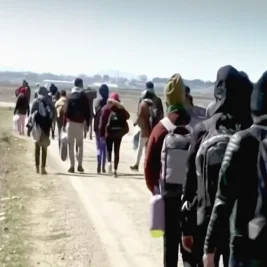
Immigration policy remains a central focus for this ideological wing, with Carlson calling for immediate restrictions due to macroeconomic shifts.
He questioned the viability of open borders amid the rapid rise of artificial intelligence affecting the job market.
"I'm for less immigration," Carlson said.
He further elaborated that the displacement of white-collar employment necessitates a complete halt to incoming labor. Carlson expressed concern over future livelihood options for citizens.
"In fact, I'm for ending all immigration today.
I don't know how you can justify immigration when half of all white-collar jobs are going away because of AI.
What are people going to do for a living?" Carlson said.
When questioned about whether his public platform was designed as an intentional counter-movement against traditional conservative networks, Carlson rejected the idea of deliberate political positioning.
He stated that his operations are guided by personal intuition rather than long-term coordination.
"I'm not strategic in any way," Carlson said.
He reiterated that his professional choices rely entirely on his internal perceptions.
"I make almost all decisions on the basis of smell and instinct," Carlson said.