Thousands of immigrants continue to take the oath of allegiance to become US citizens as the country approaches its 250th anniversary, despite facing an increasingly restrictive immigration landscape.
According to The Guardian, the naturalization journey has become significantly more challenging under the current administration, which has introduced longer waiting times, higher filing fees, and stricter test standards.
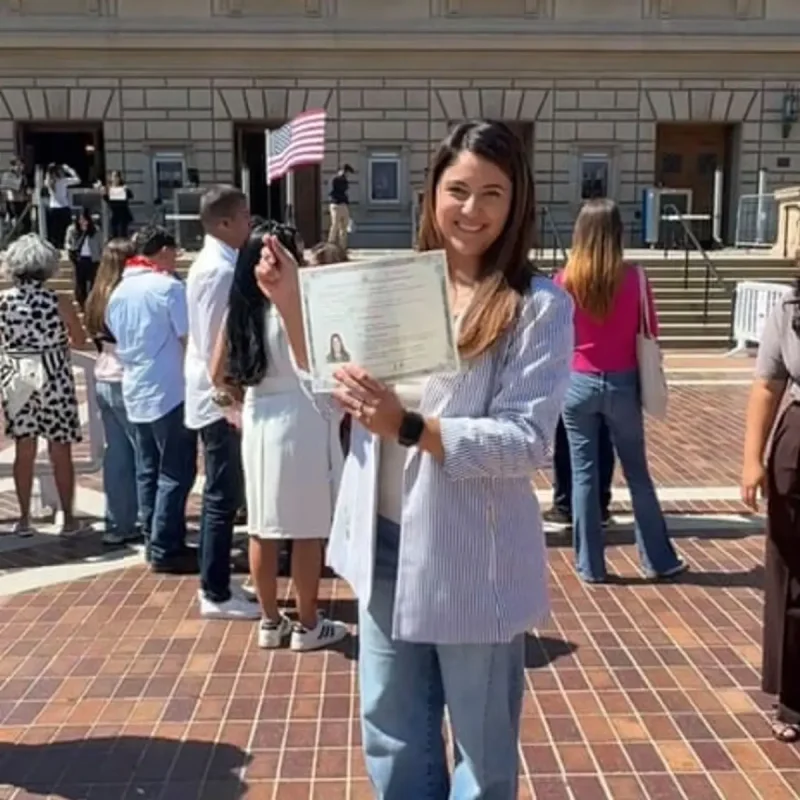
Yesica McKeone, a 32-year-old mother who migrated from Mexico at age two, officially became a citizen during a ceremony in California, marking the end of a long period of legal uncertainty.
However, her sense of achievement remains mixed with unease due to recent federal immigration enforcement actions occurring directly within her local community.
"You see around you people constantly being pushed out," said McKeone. "It's just weird times."
Advocacy groups report that the shifting political climate is actively discouraging some eligible permanent residents from moving forward with their citizenship applications.
Dahni Tsuboi, chief executive officer of Asian Americans Advancing Justice Southern California (AJSocal), noted that some individuals choose to withdraw due to fear, costs, and aggressive enforcement.
The Department of Homeland Security recently proposed escalating online citizenship application fees to $1,280, while paper applications would rise to $1,330, alongside ending fee waivers.
"Here we are celebrating our democracy while at the same time proposing a formal act that would make joining our democracy financially inaccessible for the most vulnerable people," said Tsuboi.
Despite these barriers, historical sites like Mount Vernon will host naturalization ceremonies for the upcoming national celebrations, symbolizing a reenactment of the country's founding moments.
Legal scholars point out that the US has historically maintained an accessible path to citizenship compared to nations like Qatar or Kuwait, though policy shifts frequently cause public debate.
Rogers M.
Smith, emeritus professor of political science at the University of Pennsylvania, stated that current executive actions resemble the restrictive immigration quotas seen during the 1920s.
"We are a country that right now is sending signals that Americans are putting America first," said Smith.
"And not being as welcoming as in the past."
Kwan "Dawn" Tang, a 32-year-old immigrant from Hong Kong, also achieved citizenship recently after navigating frequent airport screenings and a lack of voting rights as a permanent resident.
Tang expressed a sense of relief upon completing the six-month process, though he acknowledged a fading global faith in the United States as a welcoming destination.
"At some point, I just wanted to get it over with and leave," said Tang about the naturalization ceremony.
"I just wanted to go back and be in my little shell."
Both Tang and McKeone plan to mark the upcoming milestone, with Tang organizing a citizen-themed gathering featuring a trivia game based on the civics exam questions he mastered.