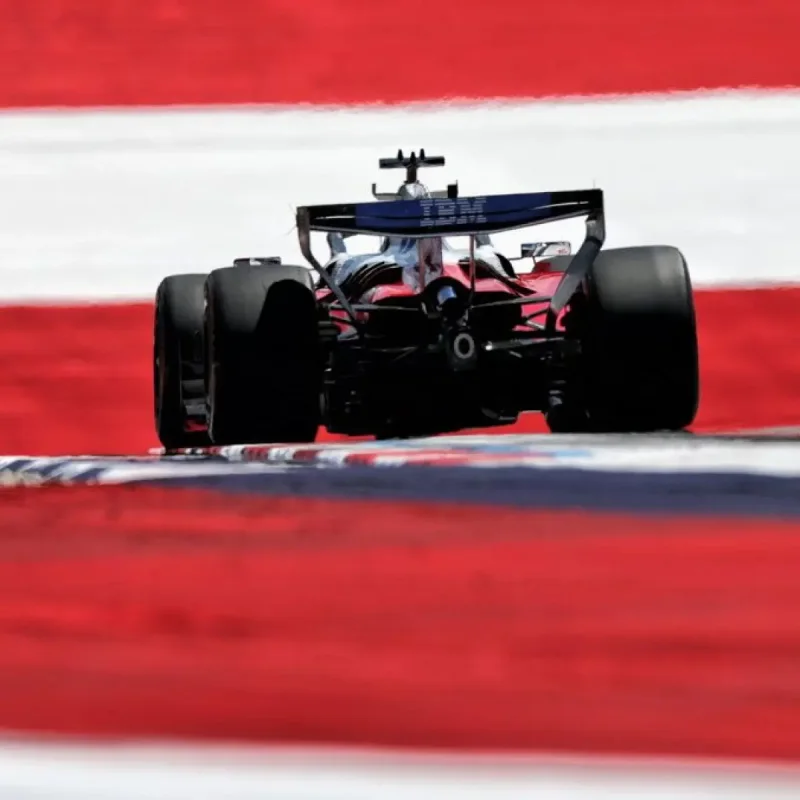
The FIA has officially banned exhaust wing designs in Formula One for the 2027 season, closing a loophole exploited by several teams.
On Friday, June 26, 2026, the World Motor Sport Council ratified the change in Macau, introducing a strict exhaust exclusion zone.
The new regulation, Article C2.3.7, creates a circular cylinder exclusion zone around the tailpipe and removes previous allowances for tailpipe aerodynamic supports.
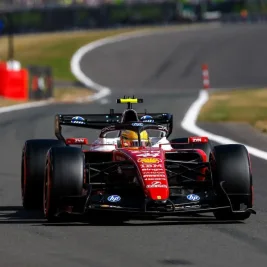
Ferrari pioneered the controversial design, internally named Flick Tail Mode (FTM), during pre-season testing in Bahrain.
Engineers moved the differential rearward under the crash structure to mount a winglet above the tailpipe, adding downforce and extending the diffuser's length.
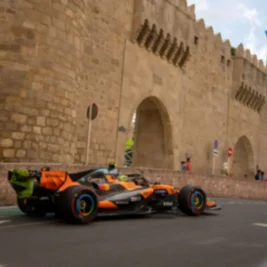
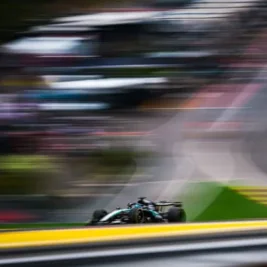
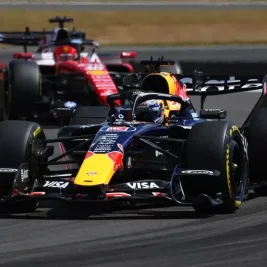
Rival teams, including Mercedes, McLaren, and Red Bull, had also exploited the loophole.
Ferrari Tests Exhaust Wing in Austria
During Friday practice at the Austrian Grand Prix, Ferrari ran comparative tests by removing the exhaust wing from rookie Dino Beganovic's car while keeping it on Lewis Hamilton's vehicle.
The team aimed to gather data for lower-downforce circuits like Monza.
Ferrari struggled for overall pace at the Red Bull Ring, with Hamilton finishing over six tenths adrift of Mercedes driver Andrea Kimi Antonelli.
Charles Leclerc, who sat out the opening session while Beganovic deputized, expressed concerns about the SF-26's handling after second practice.
"I'm not so confident, but never say never," Leclerc said. "It's been a difficult Friday for the team."
He explained that the primary issue was an overall lack of competitive speed rather than high tire degradation.
"Just overall grip, we've been sliding from all four tyres since the first lap I've done," Leclerc added.
"The bigger problem is that the pace is not there."
The FIA's 2027 regulatory updates also approved further clampdowns on floor body stays, sidepod bodywork interactions, suspension designs, and damper behaviors.