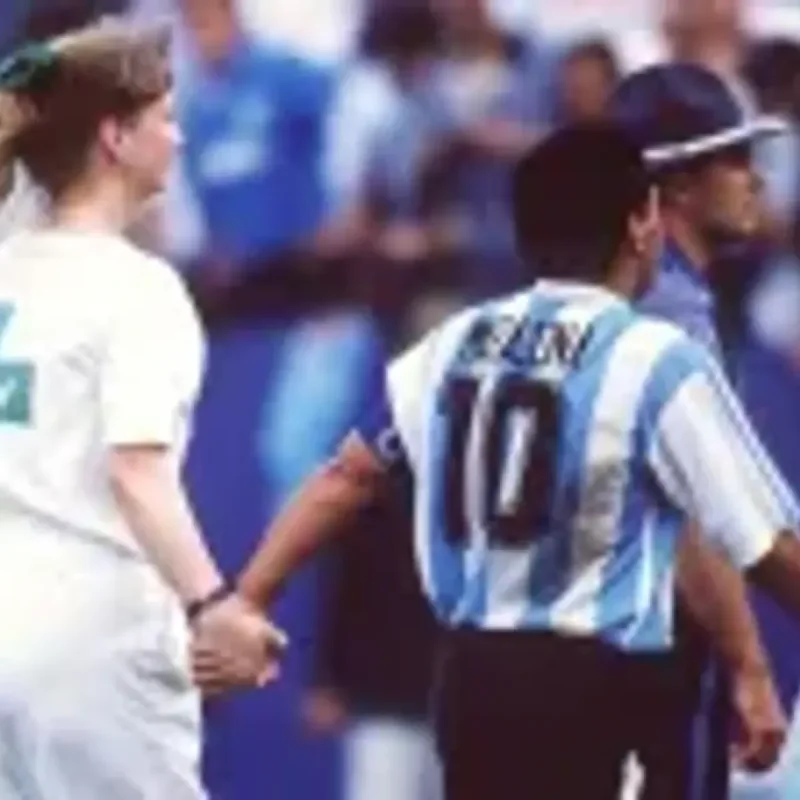
Diego Maradona's positive doping test at the 1994 World Cup in the United States remains the fourth and final drug violation in tournament history, 32 years later.
FIFA introduced anti-doping protocols in 1966, but only four positive samples have emerged across multiple decades despite a massive scale-up to an expected 4,500 tests for the expanded 48-team tournament in 2026, according to a report by EFE.
The historical record shows that Haitian midfielder Ernst Jean-Joseph logged the first positive case in 1974 after taking asthma medication, followed by Scotland's Willy Johnstone in 1978 and Spain's Ramón María Calderé in 1986, who received a one-match ban after taking a FIFA-prescribed cough syrup.
The 1994 Incident
The final and most famous incident unfolded in Dallas following Argentina's 2-1 victory over Nigeria, when a drug test detected five derivatives of ephedrine in Maradona's system, a substance introduced via an over-the-counter vitamin complex purchased by his personal trainer Daniel Cerrini.
Argentine Football Association administrative official Rubén Moschella detailed the immediate internal panic to ESPN when early warnings filtered through from the laboratory testing facilities.
"Averigüe porque me parece que hay algo," recalled Moschella, who contacted AFA president Julio Grondona before the official confirmation forced the federation to withdraw their star captain from the competition.
The decision completely derailed the Argentine squad, which immediately lost its final group stage match 2-0 to Bulgaria at the Cotton Bowl before suffering a definitive 3-2 elimination against Romania in the round of 16.
Former national team manager Alfio Basile described the devastating emotional atmosphere inside the team hotel room during an interview on ESPN F90.
"A Diego lo vi mal y lo fui a saludar. Estaba en la cama, llorando con algunos otros compañeros que también lloraban.
Muy triste, ya era un velorio," stated Moschella, describing the scene before FIFA officially announced the 15-month suspension.
In a private room at the local Four Seasons Hotel, Maradona delivered his final public defense to journalist Adrián Paenza, sealing the event into global sporting folklore.
"No quiero dramatizar, pero creeme que me cortaron las piernas," said Maradona, a phrase that remains tied to the legacy of Argentine football as the city of Dallas hosts matches for a new generation of players in 2026.