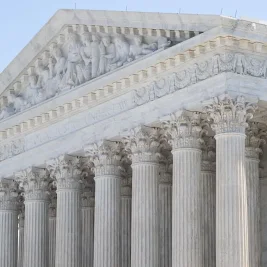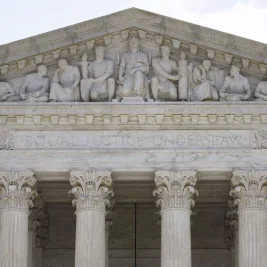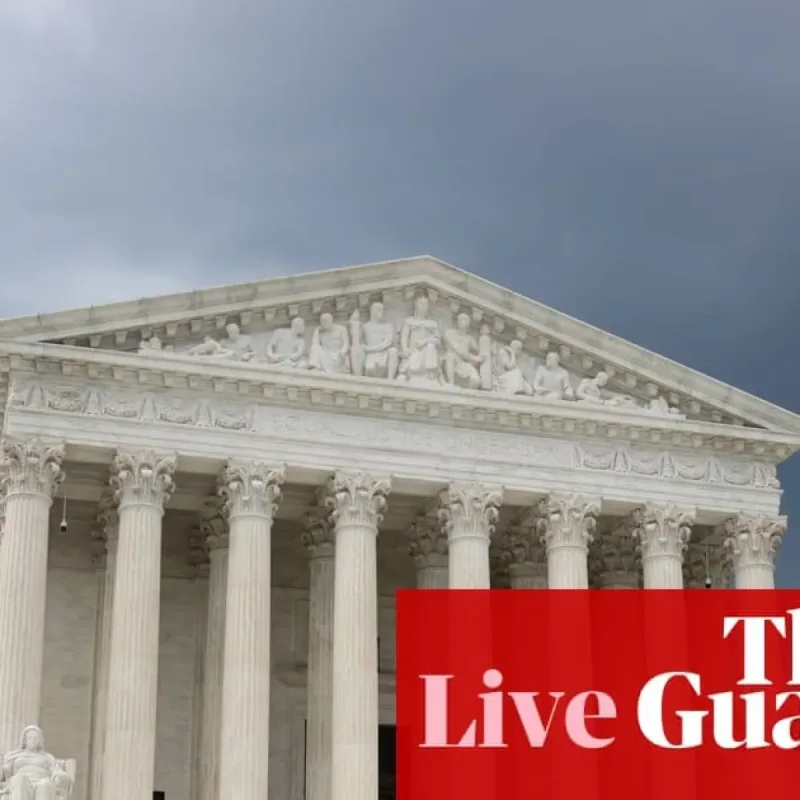
The Supreme Court expanded White House authority on Monday by adopting the unitary executive legal theory in the case of Trump v.
Slaughter.
The ruling establishes that the president possesses the constitutional authority to terminate commissioners of the Federal Trade Commission at will.
Landmark Decision Alters Agency Independence
This landmark judicial decision alters decades of agency independence, affecting bodies like the Federal Trade Commission, the National Labor Relations Board, and the Federal Communications Commission.
Legal scholars note that the ruling marks the culmination of more than 40 years of conservative legal advocacy that originated within the Department of Justice during the early 1980s.
Legal scholar Cass R.
Sunstein, who worked in the Department of Justice when the theory gained traction alongside future justices John Roberts and Samuel Alito, expressed strong opposition to the court's current trajectory.
"Well, that took a while. But the unitary executive is now the law of the land," said Sunstein.
Sunstein noted that proponents of the ideology firmly believed the executive branch was completely indivisible under the president's direct command.
"The idea of the unitary executive caught fire in the early 1980s.
That was when young lawyers at the Department of Justice reached a firm conclusion: The executive branch is indivisible, and the president is its boss," he said.
Reflecting on the evolution of federal administrative oversight over the subsequent four decades, Sunstein acknowledged a shift in his own legal perspective regarding unlimited executive removal powers.
"Forty years later, I now think we were wrong.
We overlooked the immense importance of stability in American government, and we failed to anticipate the dangers of politicizing everything," Sunstein said.