The Large Hadron Collider (LHC) officially ceased operations on June 27, 2026, initiating Long Shutdown 3 (LS3), a multi-year engineering and maintenance program directed by CERN to prepare the facility for its next high-intensity operational phase.
The 47-month shutdown represents the most extensive intervention on the accelerator complex since its original construction, aiming to transition the system into the High-Luminosity LHC (HL-LHC) by 2030.
The upgrade will intensify the collider's proton-proton collision rate by a factor of 10, jumping from the current 2.4 billion interactions per second to generate vastly larger datasets for subatomic research.
The global scientific community plans to overhaul core infrastructure during the hiatus, focusing heavily on upgrading major independent detectors like ATLAS and CMS to handle up to 200 simultaneous collisions per bunch crossing.
Engineering Challenges and Global Coordination
"The LHC has exceeded every expectation," said Oliver Brüning, CERN Director for Accelerators and Technology.
Management teams are overseeing thousands of technicians and engineers worldwide who will dismantle and rebuild key components, including replacing 1.2 kilometers of magnets within the accelerator ring itself.
"Today we say goodbye to the LHC as we have known it, while preparing to welcome its successor: the HiLumi LHC, which will extend this scientific adventure far into the future," Brüning added.
Project leaders emphasized that the structural changes will demand meticulous logistical coordination across international research institutions to keep the complex upgrade timeline strictly on track.
"The LS3 represents a huge and complex logistical and engineering undertaking," said Jean-Philippe Tock, Head of the LS3 Coordination Team.
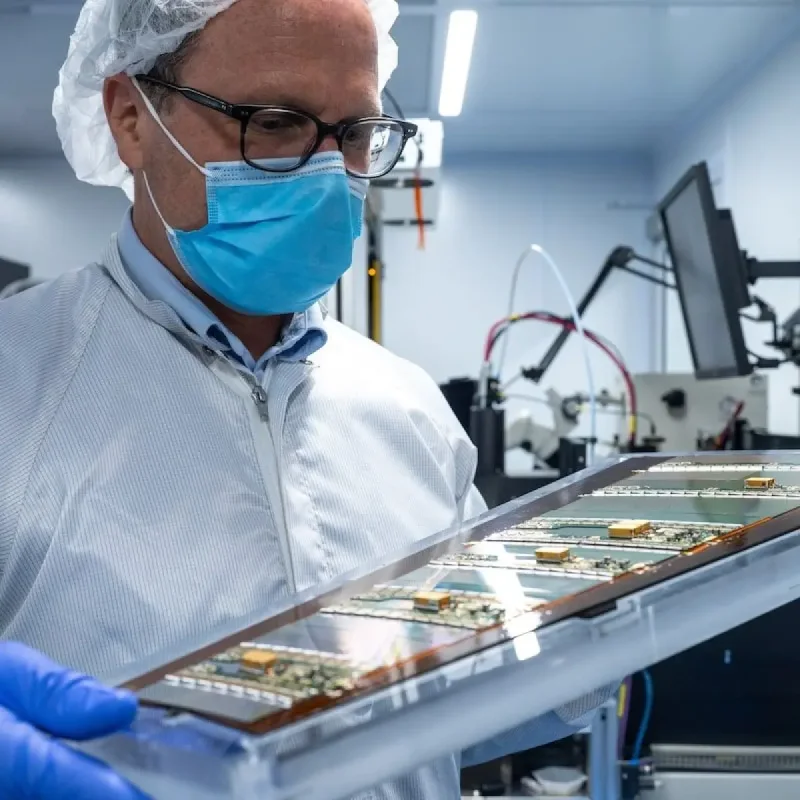
The planned alterations also feature Canadian-built components, including specialized silicon inner tracker sections and magnetic crab cavities designed to rotate proton beams to maximize particle collision probabilities.
"In the LHC alone, 1.2 km of magnets and components will be removed and replaced with new equipment, and across the whole complex, dozens of projects are planned, involving thousands of engineers, physicists, technicians and support personnel," Tock added.
Researchers in British Columbia face strict operational windows to deliver these ultra-sensitive tracking mechanisms to the Swiss facility before the targeted restart date.
"The theory landscape is wide open in terms of breakthrough discoveries, but we need the data to really shed light on this," said Bernd Stelzer, a professor at Simon Fraser University and a project leader on the effort.
Engineers at the TRIUMF particle accelerator center are coordinating their workflows with European schedules to prevent integration delays.
"The clock is ticking," said Luise Poley, a TRIUMF scientist and project manager for Canada’s share of a device called the ATLAS inner tracker.
The upgrade requires managing substantial modifications safely without compromising the delicate, pre-existing equipment that remains housed deep inside the subterranean caverns.
"Now things need to be installed, and now we have a deadline," Poley said.
CERN personnel stated that stopping the machine elicits mixed emotions due to the sheer volume of advanced engineering tasks scheduled for completion before 2030.
"Our goal is to increase the collision rate by a factor of 10," said Markus Zerlauth, overall project leader for the upgrade, who has worked at CERN for more than 20 years.
The facility will maintain an active analysis program during the shutdown, processing the 332 inverse femtobarns of collision data gathered during Run 3.
"Every transition is always a bit exciting," Zerlauth said.
The newly engineered instrumentation, including an all-silicon tracker and high-granularity timing detectors, will optimize the facility for discovering phenomena outside the Standard Model.
"Then, of course, there is also a bit of wariness, because we see a huge task ahead of us," he added.
Detector Upgrades and Scientific Outlook
The ATLAS collaboration intends to use the multi-year shutdown to fundamentally reinvent its event-selection systems and computing infrastructure.
"The HL-LHC will shape particle physics for decades to come, and preparing for it is among the most ambitious scientific undertakings our collaboration has ever engaged in," said ATLAS Spokesperson Stéphane Willocq.
Physicists plan to leverage the massive existing data pool to execute precision tests on current theories while installation teams rebuild the core systems.
"To record data under these extreme conditions, the ATLAS experiment's core systems have been fundamentally reinvented.
This will allow us to continue pushing the frontiers of knowledge, exploring the limits of our current theories and looking for answers to the questions they leave open," Willocq added.
The global collaboration is mobilizing thousands of members to manage the transition from large-scale components production to underground integration.
Coordination teams are establishing precise phase tracking to ensure global contributions fit together seamlessly in the underground cavern.
"It is an ambitious and deeply complex programme that demands an all-hands-on-deck effort from our entire collaboration, and thousands of ATLAS members worldwide have been engaged in these activities," said Benedetto Gorini, ATLAS Upgrade Coordinator.
Technical coordinators compared the current engineering campaign to carefully dismantling and reconstructing a complex ship inside a narrow bottle.
"Our upgrade projects have been underway for several years, advancing steadily from design and prototyping into large-scale production and global integration.
We are now entering a critical phase: finalising construction and preparing these systems for installation in the ATLAS experiment," Gorini said.
Teams are prioritizing rigid timelines to guarantee that the upgraded experimental systems are fully prepared when particle beams return.
"Every phase of this engineering effort must be timed to perfection," said Martin Aleksa, ATLAS Technical Coordinator.
Operations personnel confirmed that high data-taking efficiency during recent runs provided a rich dataset to sustain theoretical physics research for years.
"We are coordinating teams from around the world, each with their own schedules and responsibilities, while ensuring access to the detector and protecting the delicate systems that remain in place.
These operations must be completed on time if we are to be ready when the beams return," Aleksa said.
The accumulated data from recent years will double the statistical power available to scientists investigating rare physical phenomena.
"Throughout Run 3, the ATLAS operations teams maintained high data-taking efficiency across proton-proton, heavy-ion and specialised low-energy runs," said Eric Torrence, Run Coordinator.
The upcoming analytical phase will allow physicists to subject the Standard Model to unprecedented statistical scrutiny.
"Their dedication, together with the excellent performance of the LHC and improvements implemented during the previous shutdown, enabled ATLAS to record its largest dataset yet.
This rich pool of data means that the coming years will be among the most scientifically productive in the experiment's history," Torrence added.
The collaboration expressed total confidence in its global network of experts to navigate the technical challenges of the High-Luminosity transition.
"These data underpin a rich and diverse physics analysis programme spanning a broad range of subjects, from precision measurements of the Higgs boson to searches for rare phenomena that could point to physics beyond the Standard Model," said Kerstin Tackmann, ATLAS Physics Coordinator.
The analytical work will run concurrently with infrastructure modifications until the scheduled restart of the accelerator complex.
"When combined with data collected during LHC Run 1 and Run 2, we will more than double our statistical power.
This will allow us to stress test the Standard Model of particle physics like never before," Tackmann said.
The next phase of high-energy physics operations is scheduled to commence at the conclusion of the shutdown period.
"We have our work cut out for us, but this is a challenge the ATLAS Collaboration is ready to meet," concludes Stéphane.
The gradual restart of the integrated accelerator complex is scheduled to begin in 2028, leading into the formal High-Luminosity LHC era in 2030.
"The strength of ATLAS lies in its people.
Our collaboration brings together individuals from across the globe and from diverse fields of expertise to tackle some of the most profound questions in nature.
As we set course for the HL-LHC era, we do so with confidence, knowing that our collective efforts have repeatedly delivered major scientific advances.
The years ahead will be defined by both extraordinary scientific discoveries and remarkable technical achievements," Stéphane concluded.