Small poultry farms across the United States are operating under strict biosecurity protocols as the persistent threat of highly pathogenic avian influenza H5N1 risks devastating their businesses.
Joshua Beebe, owner of Tardif Poultry Farm in Connecticut, manages daily risks by disinfecting vehicles and limiting access to his 3,000 birds to prevent potential pathogens from entering the property.
The US Department of Agriculture stated that the vast majority of avian influenza introductions into domestic poultry stem from contact with infected wild birds rather than transmission between different commercial farms.
"We spray them off and scrub them with a brush.
It's a precaution; the goal is to eliminate as many potential avenues for a pathogen to enter as possible," said Beebe.
Beebe previously experienced a total flock depopulation of 5,000 birds in mid-2024 after state-mandated testing detected salmonella, which resulted in an eight-month quarantine that ended the following February.
"It was emotionally draining," Beebe said.
The farm has since been gradually rebuilding its population, which currently includes a variety of chickens, turkeys, geese, and ducks sold directly to local consumers.
"I haven't gone a day without seeing birds when I walk out my door in over 10 years.
The silence [was] the worst," Beebe said.
To protect the expanding flock, workers strictly segregate the birds by age and utilize dedicated footwear for each station to prevent cross-contamination.
Visitors are permitted at the front farm shop but are completely barred from entering the rearing areas where the livestock is kept.
"No one is allowed in the back where the birds are. Period," Beebe said.
Employees who keep birds at home must wear specific shoes and laundered clothes, while any dead farm birds are immediately buried, composted, or sent for incineration.
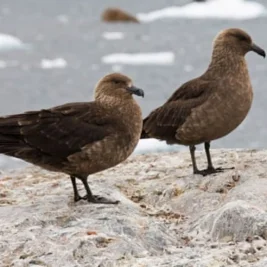
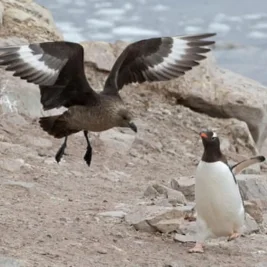
Biologists note that wild bird populations carry a high viral load, making overhead flights and farm stopovers a primary vector for transmitting avian flu.
Scientists track how the virus spreads easily through minimal contact with wild waterfowl droppings or through local pests like mice and cats.
"The virus is so abundant in the wild bird population," said Richard Webby, researcher at St. Jude Graduate School of Biomedical Sciences.
To mitigate these airborne risks, the farm utilizes extensive netting, reflective ribbons, and fake owls to deter wild birds from landing near the coops.
"Even one gram of bird droppings can contain billions of viral particles," said Ilaria Capua, virologist.
Climate changes further complicate these biosecurity efforts by altering the migration patterns and duration of wild waterfowl stays in specific geographic regions.
Mixing different species during extreme weather poses additional infection risks, though smaller poultry operations in New England continue to monitor surrounding state outbreaks closely.
"These behavioral shifts mean birds may stay longer in certain areas," said Diann Prosser, research wildlife biologist.
Federal policies mandate that a single positive avian influenza case requires the immediate depopulation of the entire flock to control the disease.
"We know that different [types of poultry] have different likelihoods of infection, such as ducks having more than chickens based on biosecurity practices and individual host responses," Prosser said.
Beebe recalls the financial toll of his previous salmonella quarantine on June 6, 2024, which halted all farm income while maintaining high daily operational costs.
The state quarantine forced the cancellation of supplier orders and generated local rumors before the farm ultimately chose depopulation over expensive individual retesting.
"Once you have one bird positive, you have to depopulate the entire flock.
It's sad, but that's a mandatory USDA rule," said Indu Upadhyaya, poultry and food safety expert at the University of Connecticut.
The farm had to euthanize its birds using carbon dioxide gas chambers over a ten-day period, missing the vital Thanksgiving turkey revenue season entirely.
The quarantine lifted in February 2025 after extensive environmental testing, but the total cost of rebuilding the lost bloodlines is estimated near $50,000.
Agricultural officials confirmed that indemnity programs exist specifically for mandatory avian influenza control but do not cover losses from other private business disease risks.
Tardif Poultry Farm continues to fund its ongoing repopulation independently without state or federal financial offsets for the salmonella losses.
The exact source of the previous bacterial contamination remains unknown to the owners.
The farm relies entirely on direct customer sales to recover its substantial financial losses.
Operational adjustments continue as new batches of chickens arrive at the facility.
The high prices of replacement poultry slow down the full restoration of the farm's original production capacity.
"I worked on the bloodlines of some of the birds for 10 years, and it's all gone," Beebe said.
The state agricultural department maintains that testing costs for non-influenza diseases remain the sole responsibility of individual farmers.
Current state programs do not feature specific funds to offset these private operational deficits.
"We do not have a program at the current time that would offset any of the losses," said Bryan Hurlburt, commissioner of the Connecticut Department of Agriculture.