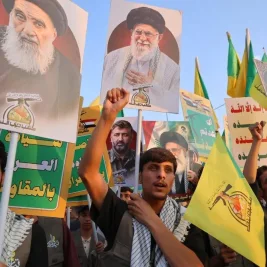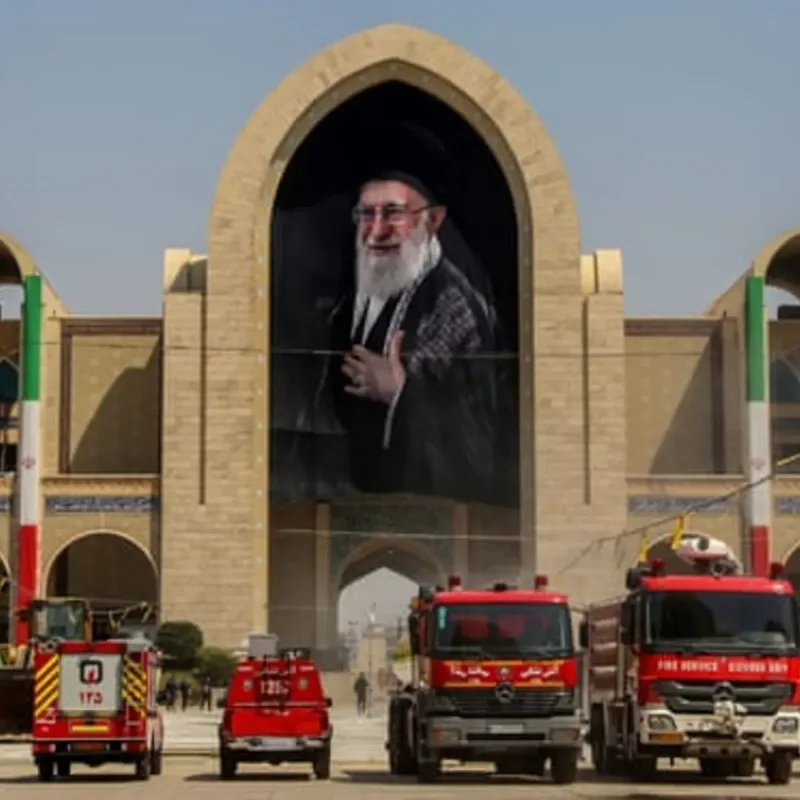
Funeral ceremonies for former Iranian Supreme Leader Ayatollah Ali Khamenei will begin in Tehran on Saturday, July 4, more than four months after his death.
Iranian officials announced a multi-stage event spanning Tehran, Qom, Iraq, and Mashhad, where burial is set for July 9.
State-linked organizers project potential turnouts in the tens of millions, though external verification remains impossible.
Delay Sparks Criticism
The scheduling has drawn scrutiny due to Shiite Islamic customs requiring prompt burials after death. Critics question the delay's alignment with orthodox religious mandates.
"In Islamic jurisprudence, there is a strong emphasis on burying the dead without delay," said Vahid Heroabadi, a former Shiite cleric living in Europe, to DW.
He noted that the assassination and leadership transition could alter internal dynamics.
Heroabadi suggested the power shift could create a new domestic balance.
"It could provide the basis for a period of redefinition in the domestic balance of power and, consequently, in the country's external relations," he said.
New Leader's Absence
Uncertainty persists over whether Mojtaba Khamenei, who succeeded his father as supreme leader, will attend public events.
He has not appeared in months following reported injuries from the same strike that killed his father.
Ali Akbar Pourjamshidian, head of Iran's national funeral committee, stated on July 1 that any announcement regarding Mojtaba Khamenei's attendance must come from the leader's office or the commander-in-chief.
His absence has already impacted symbolic family events, including his wife's funeral.
International Dignitaries Expected
The funeral will host international dignitaries. Interior Minister Eskandar Momeni confirmed expected arrivals of presidents, prime ministers, and ministers.
Reuters reported that India and over 30 other nations plan to send official delegations.
Analysts say foreign representation will serve as a political metric for Tehran's international standing after the conflict and succession.
Bilateral relations, particularly with Russia, are expected to face scrutiny.
"I believe that the future of Iran–Russia relations will depend on what strategy the new power structure in Tehran adopts toward the West, the economy, and regional security," said Ahmad Vakhshiteh, a senior lecturer at RUDN University in Moscow, to DW.
Vakhshiteh observed that external expectations of an immediate institutional collapse have not materialized.
"It became clear that, contrary to expectations, the Islamic Republic is more system-oriented than personality-driven and was able to preserve its political continuity," he said.