A new savings vehicle called Trump accounts becomes available on Saturday, giving American parents a new way to invest for their children's future through funds managed by major Wall Street firms.
The program targets children born between January 2025 and December 2028, covering nearly all of Donald Trump's second presidential term.
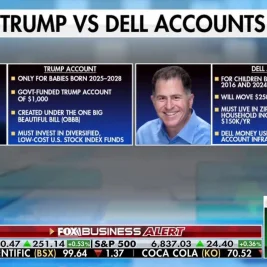
Each account will receive an initial $1,000 contribution from the federal government, with additional deposits of up to $5,000 annually allowed from parents, friends, and employers.
The rollout coincides with the 250th independence celebration, linking the financial program to the milestone and the president's personal branding.
To register, parents must complete IRS form 4547, a symbolic nod to Trump as the 45th and 47th US president.
Legislative Origin and Fund Management
Established under the One Big Beautiful Bill Act, passed by congressional Republicans last year, the funds remain under parental control until the child turns 18.
Upon adulthood, beneficiaries assume full responsibility and can use the savings for college tuition, property purchases, or business startups.
The US Treasury Department announced that deposits will automatically go into an S&P 500 index-tracking fund managed by State Street, with funds from BlackRock and Vanguard joining later.
Bank of New York Mellon and Robinhood are collaborating on a dedicated management app.
Philanthropic Contributions and Public Reception: The initiative has drawn backing from billionaires including Dell Technologies founder Michael Dell and his wife Susan, who donated $6.25 billion last year.
Their contribution adds $250 extra into accounts for 25 million children under 10 in economically disadvantaged areas.
Hedge fund manager Ray Dalio and his wife Barbara also contributed to provide $250 boosts for about 300,000 children in lower-income Connecticut regions.
While GOP lawmakers champion the legislation as the "Working Families Tax Cuts Act" due to its indefinite extension of lower tax rates, public approval remains contested.
A PBS News/NPR/Marist survey last month found two-thirds of respondents disapproved of the president's economic performance.