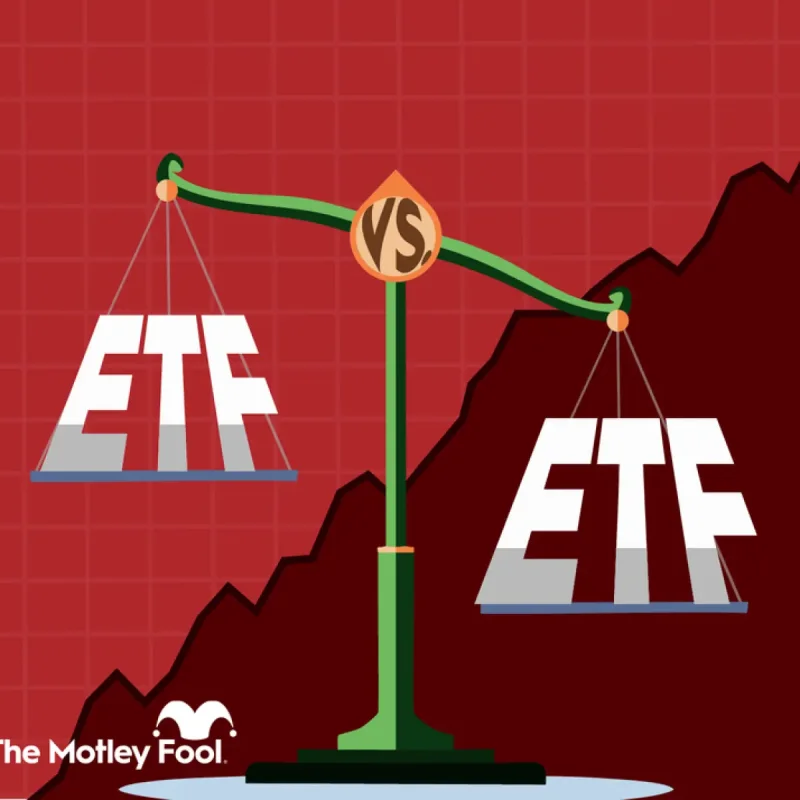
Large-cap growth exchange-traded funds have delivered stronger five-year total returns than small-cap growth funds, according to data from Yahoo Finance and Motley Fool as of July 30, 2026.
The Vanguard Russell 1000 Growth ETF (VONG) turned a $1,000 investment into $1,685 over five years.
In comparison, the iShares Russell 2000 Growth ETF (IWO) grew the same amount to $1,252.
Key Differences in Structure and Performance
VONG holds $53.4 billion in assets under management and charges a 0.06 percent expense ratio.
Its 369-stock portfolio concentrates 54 percent in technology, led by Nvidia, Apple, and Alphabet.
IWO manages $14.4 billion in assets with a 0.24 percent expense ratio across more than 1,100 holdings.
Healthcare dominates at 29 percent, followed by technology at 22 percent and industrials at 16 percent. Top positions include Brightspring Health Services, Moog, and Krystal Biotech.
Despite trailing in five-year cumulative performance, small-cap growth showed strong short-term momentum.
IWO posted a 24.77 percent one-year return as of July 30, 2026, compared to VONG's 4.13 percent.
IWO also paid higher dividends per share at $1.64 versus VONG's $0.58, though both funds offer similar distribution yields around 0.42 to 0.45 percent.
Risk metrics indicate higher price volatility in smaller equities.
IWO recorded a five-year beta of 1.43 relative to the S&P 500 and a maximum drawdown of negative 42.02 percent.
VONG maintained a lower beta of 1.19 and a maximum drawdown of negative 32.72 percent.
Comparative analyses from State Street small-cap growth products highlight that small-cap funds offer broader sector diversification across industrials and healthcare.
However, tech-heavy large-cap growth portfolios have historically generated higher cumulative returns with lower maximum drawdowns.