Residents across nine northern U. S.
states may catch a glimpse of the northern lights on Thursday night, July 30, 2026, according to forecasts from the National Oceanic and Atmospheric Administration (NOAA).
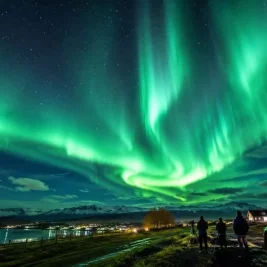
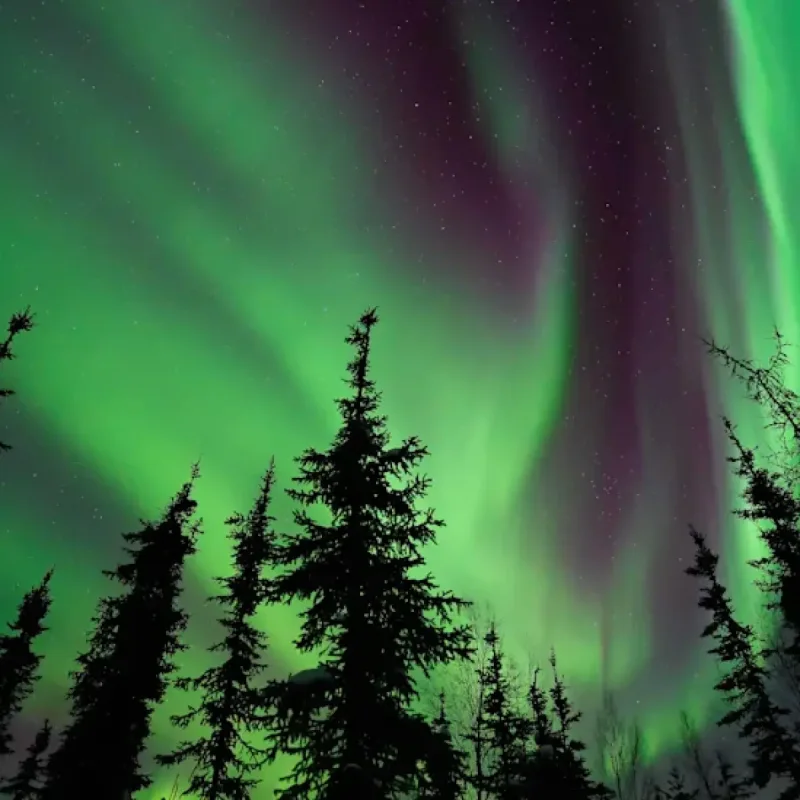
Skywatchers in Alaska, Washington, Idaho, Montana, North Dakota, South Dakota, Minnesota, Wisconsin, and Michigan have the highest probability of viewing the aurora borealis, with Alaskans having the best vantage point.
The Space Weather Prediction Center projects a Kp index of 4 for the evening, signaling elevated auroral activity that extends further from the poles than usual.
Solar forecasts indicate two coronal mass ejections are currently traveling toward Earth.
These clouds of magnetic fields and charged particles from the sun could potentially enhance geomagnetic activity beyond current expectations.
The NOAA Space Weather Prediction Center noted that chances for G1 or greater activity during the forecast period sit at 25 to 30 percent, but could become higher depending on both CME trajectory.
No major geomagnetic storms are expected immediately, though the preliminary forecast for Friday night maintains a similar Kp index of 4 across the same northern region.
However, viewing conditions may face interference from recent lunar activity, as the full moon reached its peak earlier in the week.
Short summer nights also reduce the window of complete darkness required for optimal visibility.
Experts recommend looking north between 10 p. m.
and 2 a. m.
local time from high, dark locations far from artificial light pollution.
Photographers using mobile devices can improve results by enabling night mode, turning off the flash, and shooting in camera RAW format to capture faint auroral colors.
The current displays follow a period of heightened solar activity between 2024 and 2025, when the sun reached its solar maximum phase.
NASA recorded a 500-year peak in auroral activity during 2024, with overall frequency expected to decline gradually through the remainder of the decade as solar cycle activity decreases.