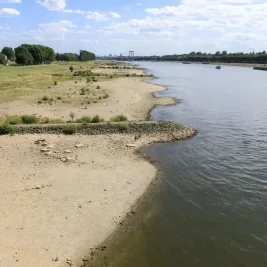
"It's an exceptionally serious situation and one that will have long-lasting impacts on our environment, wildlife, and the economy."
Health experts warned that recurring crop disruptions pose broader public health challenges.
"The drought could have a direct knock-on effect on food supplies," said Pauline Scheelbeek, associate professor at the London School of Hygiene and Tropical Medicine.
"Repeated disruption to vegetable production could make healthy food less affordable for households and have lasting effects on public health."
Hydrology experts pointed out that rapid swings between severe rain and intense dry periods reflect broader climate patterns.
"It's indicative of what we expect in a warming world," said Jamie Hannaford, head of water resources and drought at the UK Centre for Ecology and Hydrology.
Academic researchers urged immediate national investment in infrastructure to build drought resilience.
"We need long-term planning for water resourcing in the UK," said Chloe Brimicombe, climate scientist at the University of Oxford.
"Investment in water infrastructure to maintain as much water as possible."
Meteorological authorities confirmed that no immediate weather changes are expected to resolve the water deficit.
"There is currently little sign of the widespread, sustained rainfall that would be needed to make a significant difference to the areas most affected by the dry weather," said Will Lang, chief meteorologist at the Met Office.
The ongoing dry period follows 2,877 heat-associated deaths recorded in the UK during May and June heatwaves, as emergency services continue battling regional wildfires, including a major blaze on the Suffolk coast.