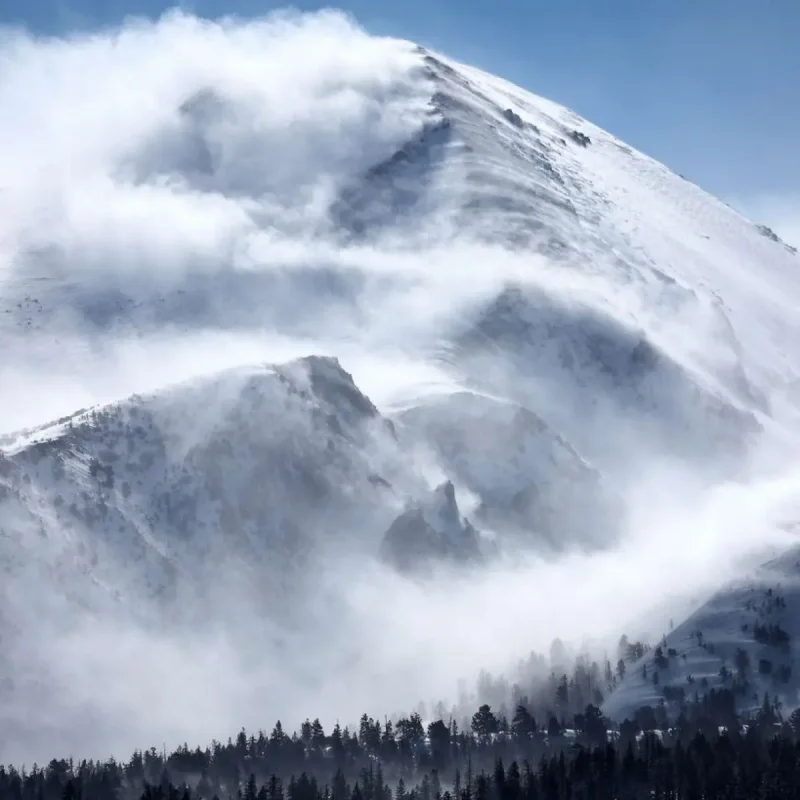
An Arctic air mass brought significant June snowfall and freezing temperatures to parts of Idaho, Montana, and Wyoming over the weekend of June 27–29, 2026.
The unseasonable winter storm developed as the jet stream plunged south across the Pacific Northwest, pushing cold Canadian air into the northern Rockies after a period of intense early-summer heat.
Winter Weather Alerts Issued
National Weather Service meteorologists reported that high elevations in Yellowstone, Glacier, and Grand Teton national parks were expected to receive several inches of snow, with total accumulations reaching up to 24 inches in specific mountain areas.
The Great Falls office of the National Weather Service issued a winter storm warning from Saturday night through Monday morning, tracking heavy precipitation shifting across North Central and Southwest Montana.
“Periods of rain and snow will continue today and tomorrow over North Central and Southwest MT. Do expect some breaks in the precipitation.
Also, the area of heavier precipitation will shift from Southwest MT this morning into North Central MT tonight,” the Great Falls office stated.
Forecasters warned that the heavy, wet snow could down trees and block backcountry roadways, creating a high risk of hypothermia for stranded individuals.
“Persons should consider delaying travel across the backcountry and higher elevations,” the National Weather Service stated.
Officials advised anyone who must travel to pack tire chains, booster cables, blankets, and extra clothing.
“If travel is absolutely necessary, consider taking a winter storm kit along with you, including such items as tire chains, booster cables, flashlight, shovel, blankets and extra clothing.
Also take water, a first aid kit, and anything else that would help you survive in case you become stranded,” the National Weather Service stated.
According to climatologists, high elevations near 6,000 to 8,000 feet frequently experience late-season snowfall, with measurable June snow documented over the past decade in 2019, 2020, 2023, and 2025.
Burns, Oregon, tied its June 29 daily record low of 33 degrees Fahrenheit, a benchmark originally established in 1947, as reported by The Financial.