President Trump announced on Monday his intention to find new legal avenues to remove Federal Reserve Governor Lisa D.
Cook from her position at the central bank. The declaration follows a recent Supreme Court ruling that stopped his initial attempt to dismiss her.
The push to remove Cook began last year when Trump alleged she misrepresented her financial records to secure better mortgage rates.
Cook has maintained her innocence, denied all allegations of wrongdoing, and has not faced any criminal charges.
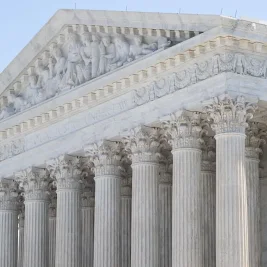
In response to the legal setback, the administration indicated that the high court's ruling would not end the matter.
Trump characterized the decision as a temporary hurdle rather than a definitive legal conclusion on his executive authority.
Trump further clarified his stance by stating that he intends to prevent individuals facing unresolved allegations from directing major economic policies.
He emphasized that future actions would be taken to protect national interests.
The legal battle moved to the high court after a federal judge allowed Cook to maintain her seat in September while she contested the dismissal.
Cook's legal team argued the firing was part of a broader effort to pressure the independent institution into lowering interest rates.
Chief Justice John G.
Roberts Jr. authored the majority opinion, which determined that the administration failed to provide Cook a proper opportunity to answer the financial allegations.
However, the ruling left open the broader question of presidential removal powers over Senate-confirmed governors.
Roberts noted that the court focused strictly on the procedural arguments presented by both legal teams.
The majority opinion did not analyze or rule on the validity of the underlying financial accusations against Cook.
The court explicitly stated that the underlying factual dispute must be evaluated under proper legal standards before any final determination on cause can be reached.