Edmonton has recorded its wettest June on record after a weekend downpour brought total rainfall to 262 millimeters by June 28, 2026, triggering severe localized flooding across the city.
The accumulation shattered a century-old milestone, surpassing the previous June record of 217 millimeters set in 1914.
Environment Canada data shows the city received 57 millimeters of rain between Friday evening and Monday morning.
Meteorologist Janelle Gergely noted that volume is more than triple the typical June average of less than 79 millimeters, leaving infrastructure struggling to manage runoff.
In the Jubilee Landing community of southeast Edmonton, heavy rain overwhelmed storm drains, trapping multiple residents in waist-high water.
Some residents used paddleboards to navigate flooded streets as property management firms and local municipalities faced urgent pleas for assistance.
Environment Canada meteorologist Brian Proctor said the recent storm pushed moisture levels past all previous June milestones.
"The wettest June previously was 217 mm in 1914, and we are way above that at this point," Proctor said.
Proctor indicated that upcoming weather systems could make this month the absolute highest rainfall total in municipal history, approaching the 283 millimeters recorded in July 1901.
"This is probably, I think, the second wettest month we've ever seen," he added.
The weather agency issued severe thunderstorm watches for Edmonton and east-central Alberta due to atmospheric conditions favoring hazardous developments.
"I wouldn't be surprised to see some thundershowers today, again tomorrow, and really right through Canada Day at this point in time," Proctor said.
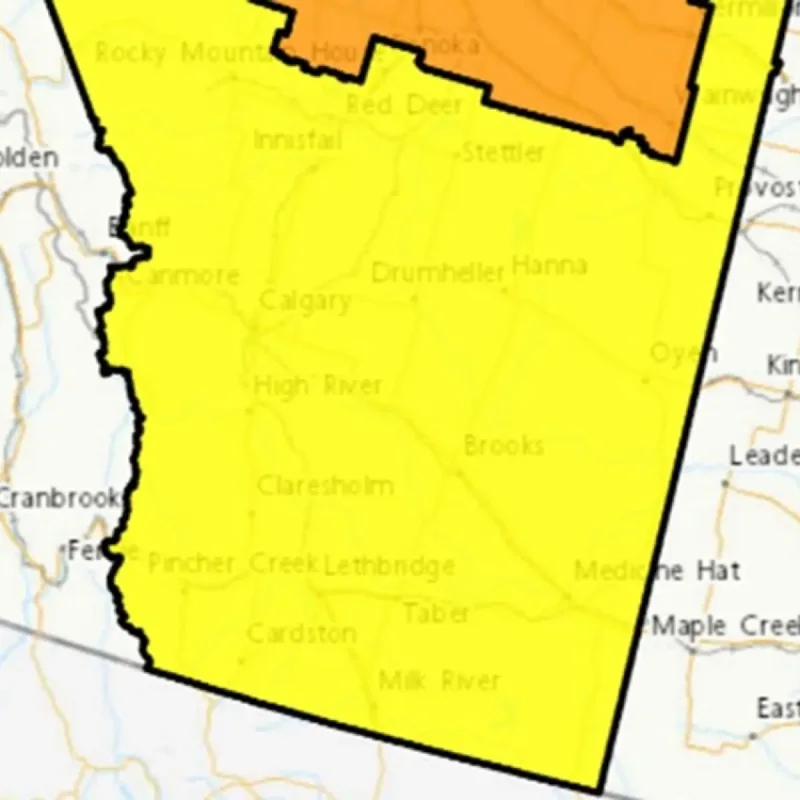
Environment and Climate Change Canada expanded regional alerts to cover all of southern Alberta, forecasting an additional 50 to 100 millimeters of rain.
"Water will likely pool on roads and in low-lying areas. Fast-moving and rapidly rising water can sweep vehicles away and damage infrastructure," the agency stated.
The yellow warning stretches between the British Columbia and Saskatchewan borders, keeping communities from Lethbridge to Red Deer on high alert for potential flash floods.