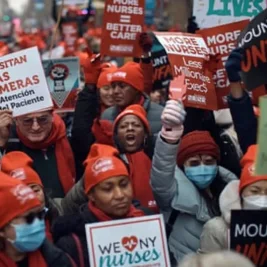
The British Columbia Nurses' Union launched its first phase of province-wide job action on Thursday, July 2, 2026, at 12:01 p.
m.
The move follows the rejection of a tentative contract agreement with the provincial health employer.
A 72-hour strike notice was issued on Monday after 67 percent of voting members turned down the proposed four-year contract.
The union represents 60,000 nurses across British Columbia.
During a vote held between May 8 and 11, 98.2 percent of 50,850 voting members favored job action.
Job Action Details
The current job action focuses on banning non-nursing duties, such as answering phones, processing doctors' orders, and cleaning.
Overtime restrictions are also being implemented.
Union leadership emphasized that nurses will not completely withdraw labor, maintaining essential services and staffing levels despite expected service disruptions.
Negotiations between the union and the Health Employers Association of B. C.
have stalled since May.
The expired collective agreement concluded in March 2025.
The rejected tentative deal from May 22 had included benefit improvements and shift premiums, but members found them insufficient under the current public sector mandate of a three percent annual wage increase.
Union officials highlighted severe systemic pressures, citing approximately 4,500 healthcare staffing vacancies across the province.
These shortages have reportedly driven up workplace injury rates, with statistics showing one nurse enters a WorkSafe BC claim due to violence every 16 hours.
Health Minister Josie Osborne stated on Monday that the provincial government respects the right of all workers to bargain and engage in legal job action.
The union stated it remains prepared to return to the bargaining table immediately, though health employers have indicated limited flexibility outside the established provincial bargaining mandate.
Adriane Gear, President of the BC Nurses' Union, said to 1130 NewsRadio: "Provincially, we will be banning non-nursing duties and restricting overtime."
Gear explained that the strategy aims to pressure employers while shielding patients from severe consequences.
"Our hope is that this will apply pressure on employers while minimizing any disruption on patient care.
The last thing we want to do is to impact our patients, our clients, or our residents.
So that’s what we’re hoping, that we will limit things to overtime," said Gear.
She noted that the classification of healthcare as an essential service limits the scope of the walkout.
"We are an essential service…so [the planned job action] unfortunately would still cause some service disruption," said Gear.
She added that safety remains a baseline priority for the participating staff.
"But we, as nurses and as healthcare professionals, would ensure that we maintain service levels of staffing," said Gear.
The union leader pointed out that the wage limitations imposed by the province failed to satisfy the membership.
"For us, that is not adequate. My members have been very clear.
They rejected the tentative agreement by 67 per cent, and that was upwards of about 43,000 nurses voting," said Gear.