
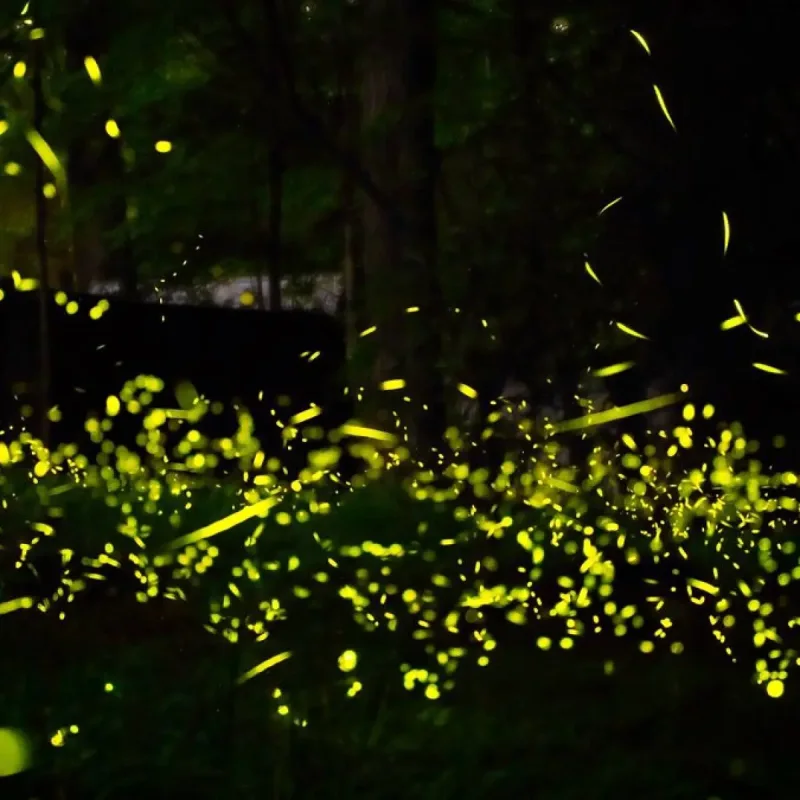
"It depends on what life stage you're talking about," says Sorenson explaining why fireflies illuminate.
Larvae flash as an aposematic defense signal to warn potential predators that they taste bad due to toxic steroids called lucibufagins, while adults use specific flashing patterns to communicate and attract mates.
"Their bright glow signals to others that they taste bad," says Sorenson.
Over tens of millions of years, adult insects adapted this light-producing ability into intricate mating rituals where flying males signal females waiting in vegetation, who then flash back if interested.
"In most North American fireflies, the males have a specific flash pattern," says Sorenson.
>>> World Cup Round of 32 Knockout Matchups Nearly Set
While call-and-response systems are common, each species uses a unique pattern, such as the synchronous species in Great Smoky Mountains National Park and South Carolina's Congaree National Park that coordinate vast displays of synchronized light.
"If they fly around at the right time of night, and make the right signal, a female might see the signal and flash back at him," says Sorenson.
However, predatory "femme fatale" fireflies of the genus Photuris mimic the flashing patterns of other species to lure in males and eat them, absorbing their glowing toxins to protect their own eggs.
"Then if everybody's happy they mate, and nobody flashes anything for a while," says Sorenson.
Sorenson explained that adult fireflies do not produce lucibufagins naturally, making this deceptive hunting strategy essential for acquiring protective chemical defenses from their prey.