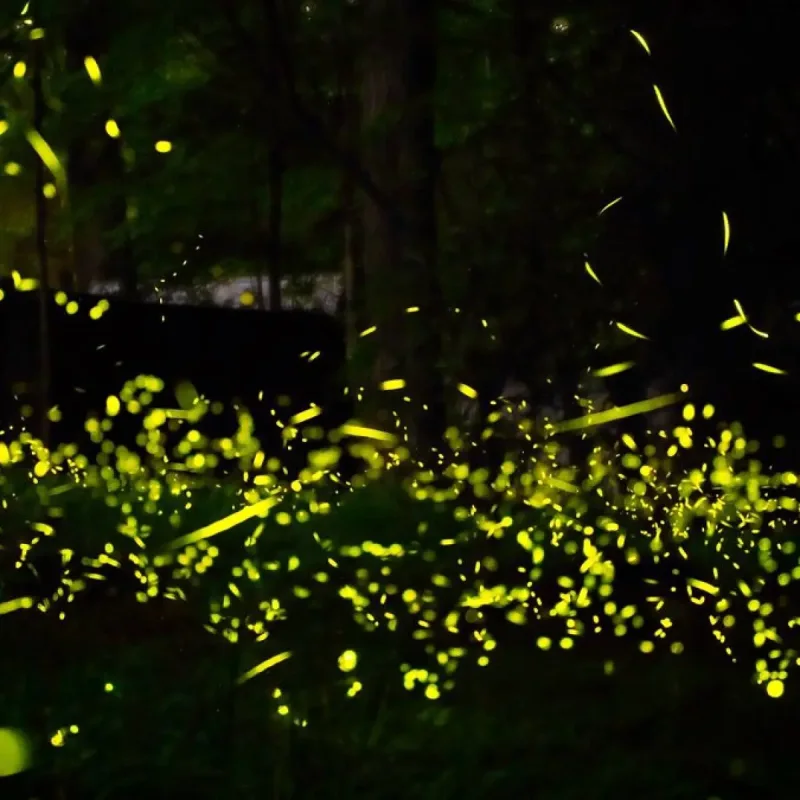
"If you're familiar with the various flash-patterns, you can figure out the species," says Sorenson, noting that roughly a quarter of world species are dark as adults.
Most fireflies complete the bulk of their feeding during their one to two years as underground larvae, consuming soft-bodied insects like snails and slugs before undergoing metamorphosis into adults.
"The femme fatales then use those [glowing] chemicals to protect their eggs," says Sorenson, "and to some extent to protect themselves from predators."
Mature fireflies live for only five days to a month, dedicated entirely to mating and reproduction, while displaying a nearly 100 percent efficiency rate in converting chemical energy into light.
"As adults, their main job is to find each other and mate and make sure there are more fireflies for next year," says Sorenson.
>>> Cleveland Guardians Return Steven Kwan to Leadoff Spot Against Seattle Mariners
Despite the current boom, long-term firefly populations face steep declines due to habitat loss from urban sprawl, agricultural chemicals, and artificial light pollution that disrupts their critical bioluminescent mating signals.