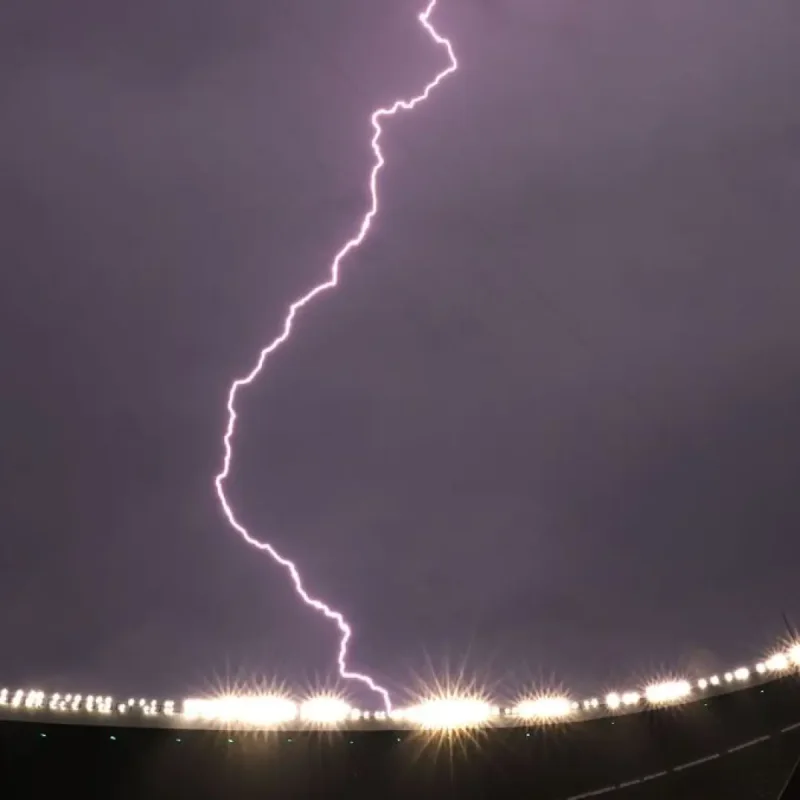
Thunderstorms around the Azteca Stadium in Mexico City forced FIFA to delay the 2026 World Cup Round of 32 knockout match between Mexico and Ecuador on Wednesday, June 30, 2026, pushing the kick-off back by one hour.
The fixture was originally scheduled to begin at 02:00 UK time, but adverse weather conditions involving flashing lightning and heavy thunder began disrupting the area approximately two hours before the planned start.
Football's governing body initially announced through its official World Cup live blog that the match would proceed without any hydration breaks once play commenced at 03:00 UK time.
However, tournament organizers quickly reversed that decision and reinstated the hydration breaks for the players during the match as weather conditions evolved.
FIFA Statement and Safety Measures
An updated statement from FIFA, which omitted the original text concerning the cancellation of the hydration breaks, clarified the official scheduling adjustment.
"Due to adverse weather conditions in Mexico City, including risk caused by lightning in the vicinity of the stadium, the kick-off of the FIFA World Cup Round of 32 match between Mexico and Ecuador has been delayed to 20.00 local time," stated FIFA.
The governing body emphasized that safety remained its primary concern during the weather disruption. "The safety and security of all individuals is FIFA's priority.
We thank all fans for their understanding and cooperation," added FIFA.
Despite the hour-long delay and persistent rain, fans inside the Azteca Stadium remained energetic, with many dancing in the stands while wearing waterproof ponchos.
The incident represents the second weather-related disruption of the current tournament, following a prior group-stage match where France's 3-0 win over Iraq was suspended for more than two hours due to severe weather alerts at halftime.
While FIFA manages the World Cup tournament, safety protocols regarding electrical storms are dictated by the guidelines of the National Oceanic and Atmospheric Administration (NOAA).
According to NOAA regulations, matches must be suspended immediately if lightning or an electrical discharge is identified within an eight-mile radius of the sporting venue.
Under those safety rules, players and team staff must retreat to the changing rooms, while spectators are advised to seek shelter inside the stadium structure.
Play can only resume under NOAA protocols if no further lightning strikes are detected within the designated eight-mile radius for a consecutive period of 30 minutes.