Rehabilitating captive jaguars remains extremely rare because many individuals become too accustomed to humans or lack necessary wild survival skills.
For instance, a male jaguar named Kusiy will live out his life in the Ambue Ari reserve because he was kept as a pet and cannot hunt.
>>> Global Livestock Surge Threatens Wildlife and Ecosystems
To prepare Yaguara, CIWY and conservation experts established a special committee to design strict rehabilitation protocols for the first-time release.
Staff constructed a 10,000-square-meter enclosure mimicking national park conditions with a pool to help her hone natural instincts, costing approximately $80,000.
Camera traps monitored her behavior as natural prey entered the enclosure, allowing her to hunt independently alongside a diet supplemented by roadkill.
"Her behavior was always in line with that of a wild jaguar," says Márquez.
Vets noted positive signs when camera traps recorded over 600 direct interactions between Yaguara and a wild male jaguar outside her enclosure.
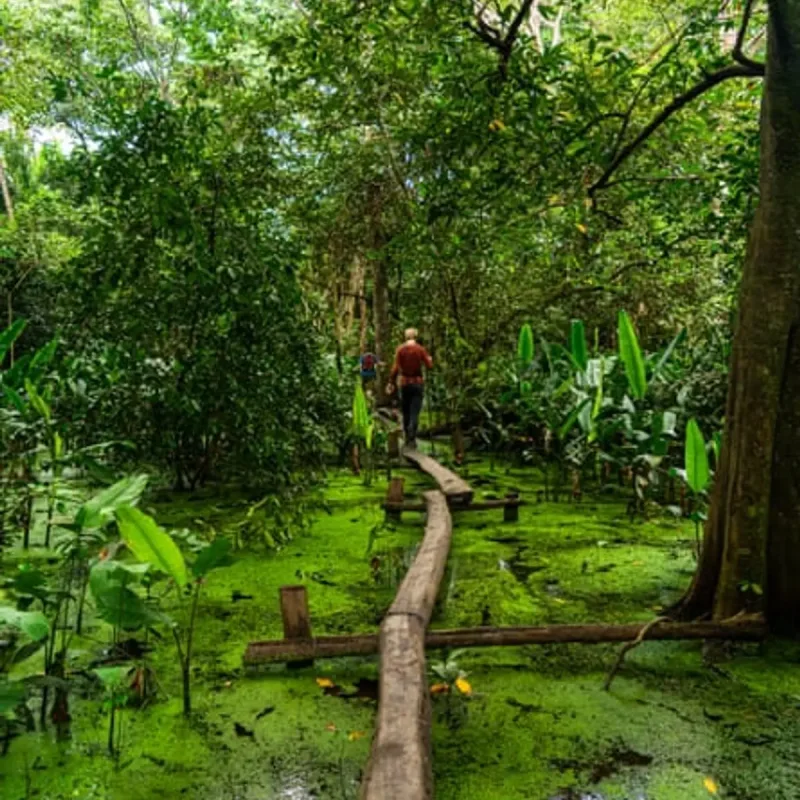
Once cleared, the team transported Yaguara via a small airplane and a boat to the national park, where she was released wearing a satellite tracking collar.
The total cost of the release reached about $120,000, leading some conservationists to question if resources would be better spent on alternative protection measures.
"Funding more in situ conservation activities, improving training of park rangers, studying wild populations with camera traps … many of these measures could deliver better results and more knowledge than raising a jaguar and then releasing it to see if it survives," says Damián Rumiz, a wildlife researcher.
However, CIWY argues the project enhances genetic diversity, provides valuable scientific data, and offers an ethical second chance to animals displaced from their habitats.
>>> Wildfires Devastate Southern France, Force Evacuations Along Mediterranean Coast
"We've laid the groundwork for many future [releases]," says Márquez. "Because, sadly, this is likely to be the first of many."